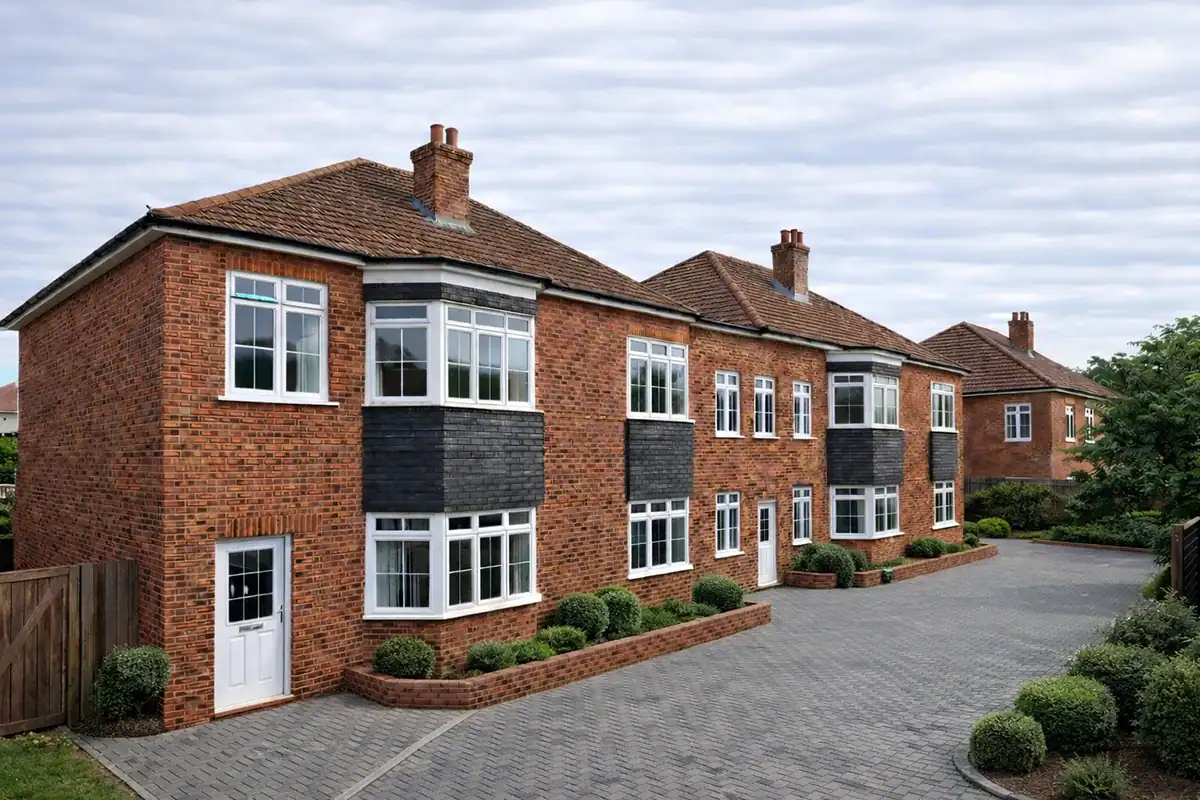

“25 per cent of all new housing uses timber frame construction” (Source: Forestry Commission Report, Aug 2021)
Why Timber Structures are on the Rise
Structural timber framing is:
Light-weight, resilient and durable.
Can be designed and engineered into the required shape for connecting to another building material, such as steel or concrete. Many types of timber can withstand severe weather conditions. Low-cost and Fast Build Engineering timber structures can offer a fast build, low-cost solution compared to a steel-framed, masonry-built structure.
Structural timber is also a favoured building material in many modular construction projects, i.e. where separate sections of a building are pre-fabricated then transported and assembled on-site.
Energy efficient and thermal performance Timber-built buildings offer enhanced heat and sound insulation, compared to steel or brick cladding materials.
Sustainable Structural Engineering
Timber construction is increasingly a sought-after sustainable solution – most notably, for private residential properties. Nearly 1 in 3 timber frame building was for detached housing. (Source: MTW Research, Mar 2022).
Timber frame structures are used for a wide variety of structural applications because wood is recognised as the most sustainable building material.
Trees absorb and ‘store’ CO2 from the atmosphere. Every 1 cubic metre of wood used can save nearly 1 tonne (0.8) of CO2. (Source: Timber Trade Federation).
3,000,000 tonnes of CO2 could be ‘stored’ – if 270,000 homes in the UK were built each year using timber framing. (Source: “UK Housing – Fit for the Future?”, Commission on Climate Change, 2018).
“Timber will play a key role in enabling the construction industry to meet the challenges of industrial decarbonisation and deliver Net Zero by 2050″. (Source: Structural Timber Association, 2021).
What is Structural Timber
Structural timber is defined as timber intended to be loadbearing. In a structural design, structural timber will be specified for its support strength and loadbearing capacity.
Structural Engineer Knowledge
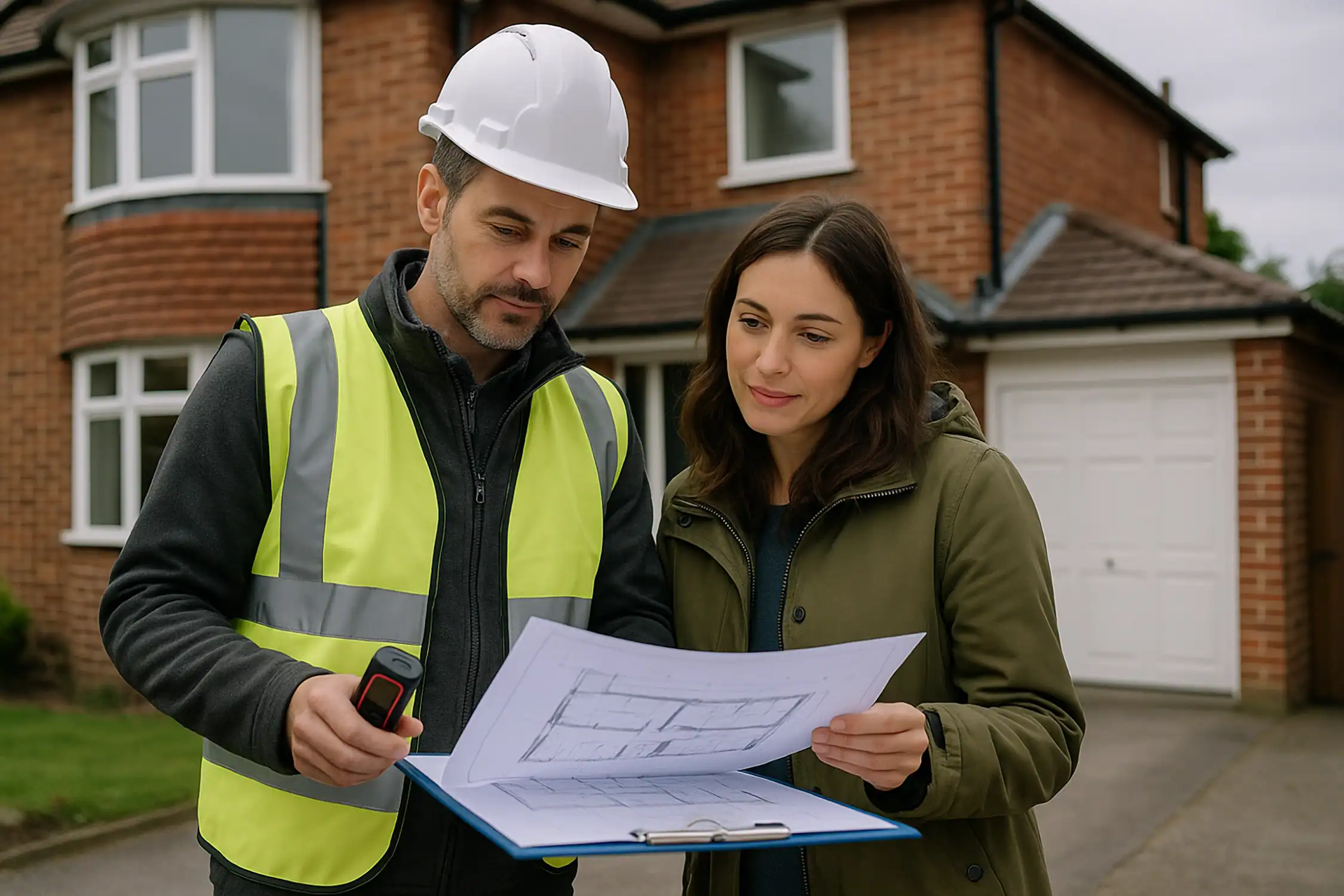
All planned construction materials, such as steel or concrete require the specialist knowledge and precise calculations of a structural engineer.
So too, with structures built with engineered wood products. Structural engineering expertise is essential to deliver structural timber elements capable of supporting the highest expected load.
Strength Grading Structural Timber
When timber is to be used in a new-build structure or property restoration, its structural capability must be strength graded.
The strength grading of structural timber will be according to BS EN 14081-1:2016+A1:2019. The requirements refer to rectangular cross-sections:
Graded visually or by machine.
Shaped by sawing, planing or other methods.
Cross-sectional dimensions for sawn, square edged structural timber must comply with EN 336, which determines:
Width and thickness – upper and lower limits.
Types of Engineered Wood Products
Architects and structural engineers work with well-known timber components and joints most often used in timber engineering within the structural timber sector, as follows:
Cross-laminated timber (CLT)
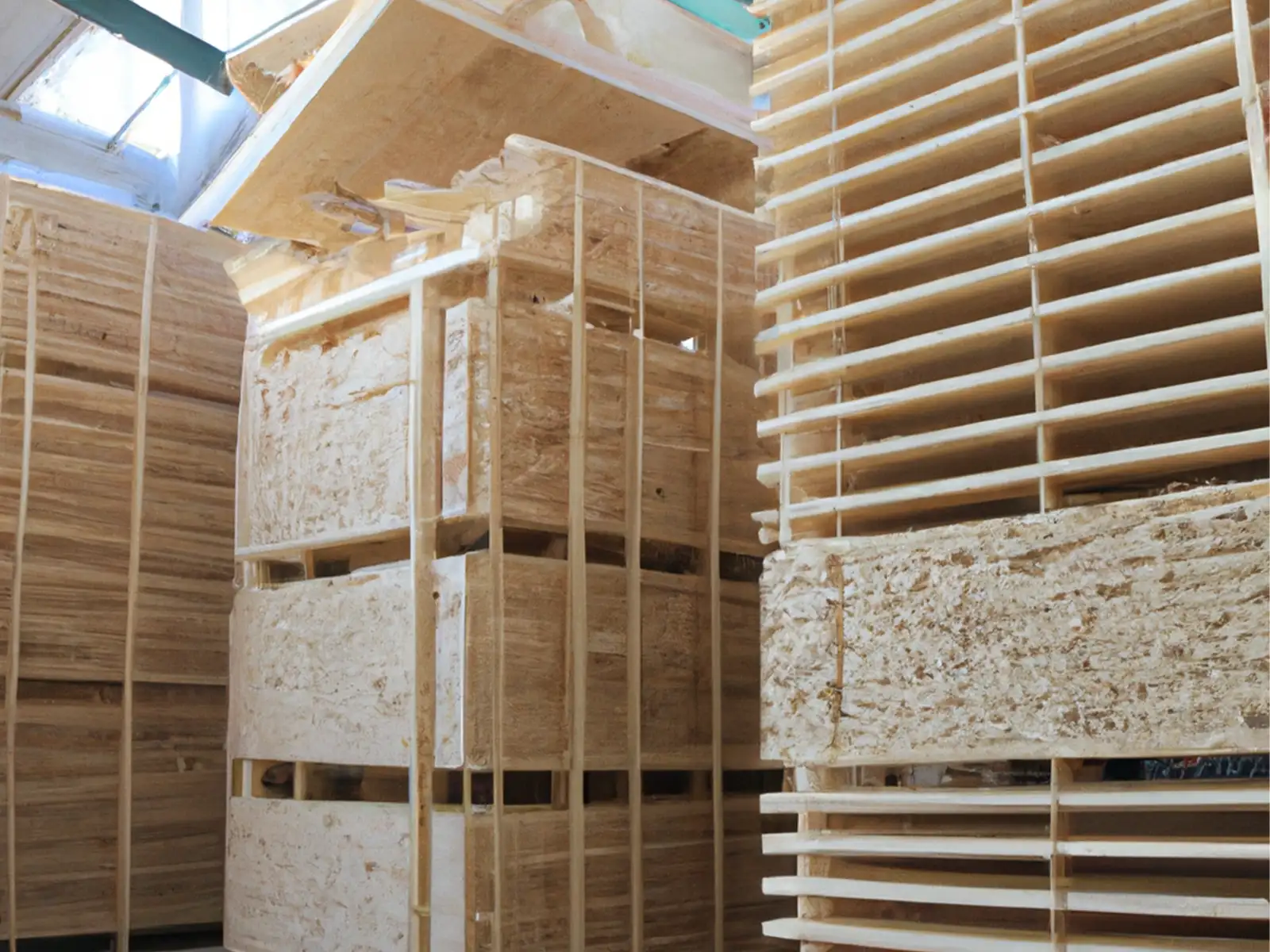
Cross-laminated timber (CLT) is a specific type of multi-layered wood panel, constructed by gluing together separate layers of sawn timber cut from a single log.
Glued laminated timber (glulam)
Glued laminated timber (referred to as glulam) is different from CLT. All layers are aligned in the same direction.
Here the timber engineering produces longer and more complex elements of up 50m x 4.5m but with a high strength-to-weight ratio for easier handling.
Glulam can also provide greater dimensional stability with reduced shrinkage, distortion or warping than a solid wood panel. A number of practical, structural beam components can be formed including:
Parallel beams.
Pre-cambered beams – to reduce deflection or ‘sagging’ under load. Sloped beams with a straight or arched bottom tie-beam (or ‘chord’).
Flitch beams (a vertical steel plate between two wood beams).
Types of timber engineering for timber structures Structural timber structures with air tight, heat retention properties designed to deliver sustainable, energy efficient building solutions.
Timber Frame: Open-Panel
Open panel timber frame systems are manufactured to form the inside load-bearing part of a lintel (or ‘leaf’) of an external wall consisting of studs, rails, sheathing and ‘breather’ membrane. Structural sheet material is fixed to a treated, softwood timber framing.
Includes a vapour barrier on the inner side of the insulation and a ‘breather’ membrane on the outer face of the panel to resist water penetration.
I-Joists
I-joists carry heavy loads but with reduced timber support than a dimensional, solid-wood joist. Key advantages of I-joists include an absence of wood shrinkage, bowing, twisting, or splitting.
Open Web Joists
Open web joists are made up of timber and steel, also known as ‘Posi Joists’. This type of timber engineering combines the lightness of wood with the strength of a steel ‘web’.
Other key advantages include the production of long-length joists. But they are easy to install, as their open web design removes the need for cutting and drilling.