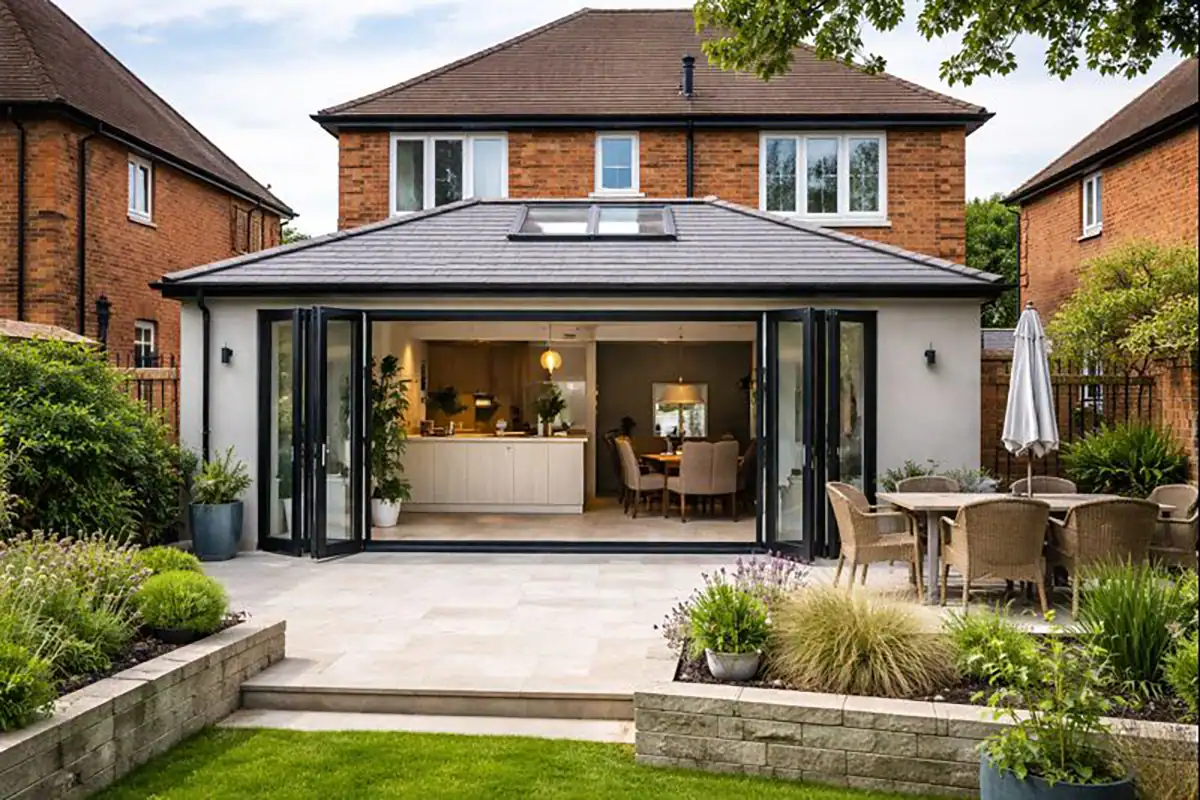

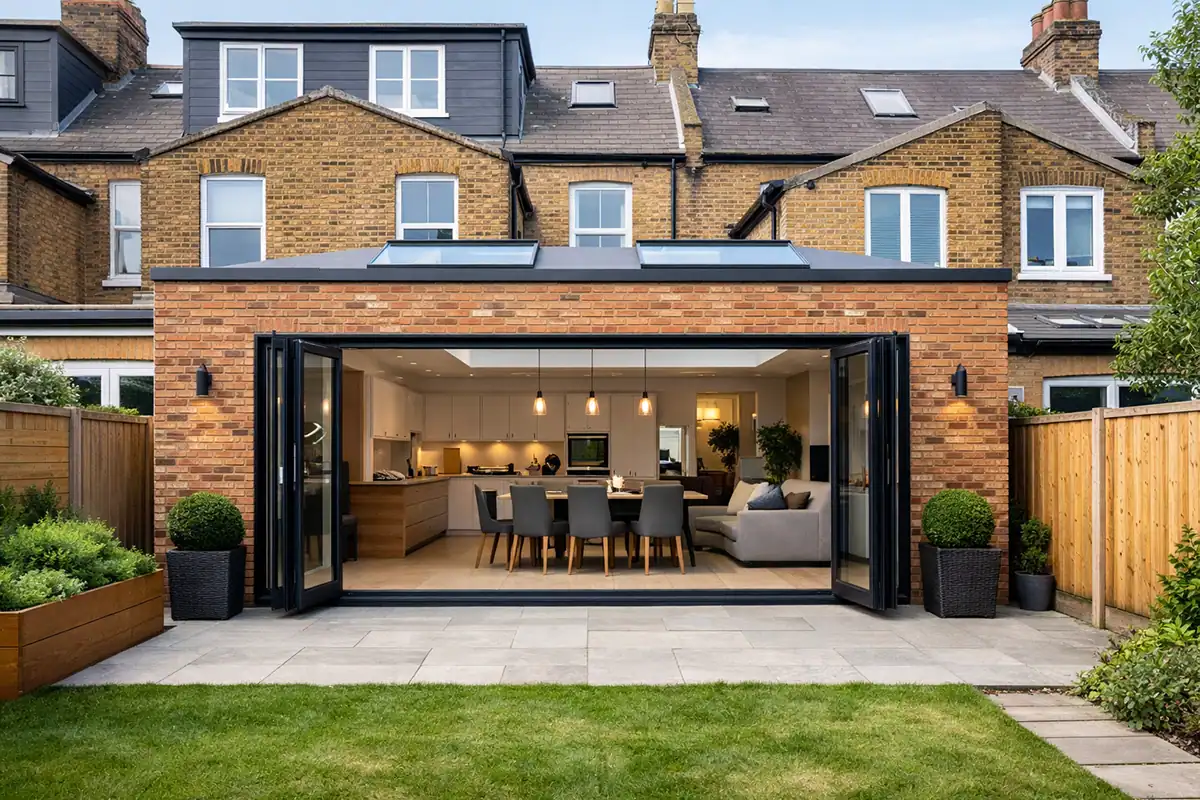
Planning a rear extension? The regulations feel overwhelming at first—foundations, drainage, structural calculations, Building Control sign-offs. But here’s the reality: rear extensions follow predictable compliance patterns once you understand what Building Control actually checks.
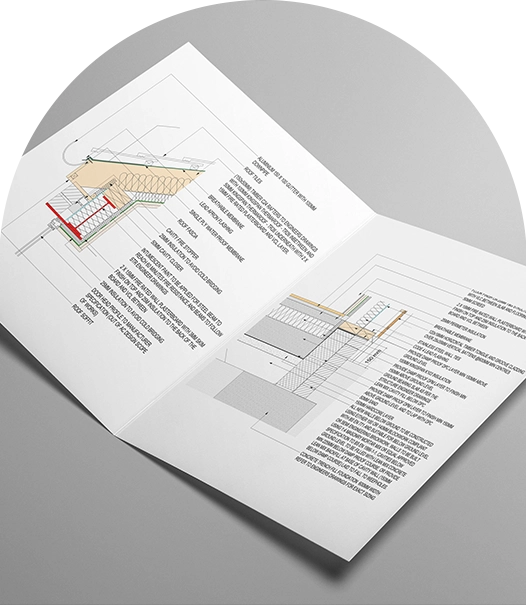
Most rear extension projects hit the same regulatory checkpoints: foundation depth, structural openings, insulation continuity, and drainage falls. Get these right from the start, and your Building Control process runs smoothly. Miss them, and you’re looking at expensive mid-build corrections. All rear extensions Building regulation drawings are required.
This guide walks through every Building Control requirement specific to rear extensions. Whether you’re adding a single-storey kitchen extension or going for a full two-storey rear addition, these regulations apply to every project.
Foundations for Rear Extensions
Rear extension foundations must match or exceed the depth of your existing house foundations. Most two-storey properties need 900mm to 1000mm depth. Building Control requires structural calculations showing how new foundations tie into the original structure without undermining existing support.
Your residential structural engineer specifies the offset distance between new and old foundations. The standard rule? One metre horizontal distance for every one metre difference in foundation depth. Closer than this means you’ll need underpinning calculations or a piled foundation solution.
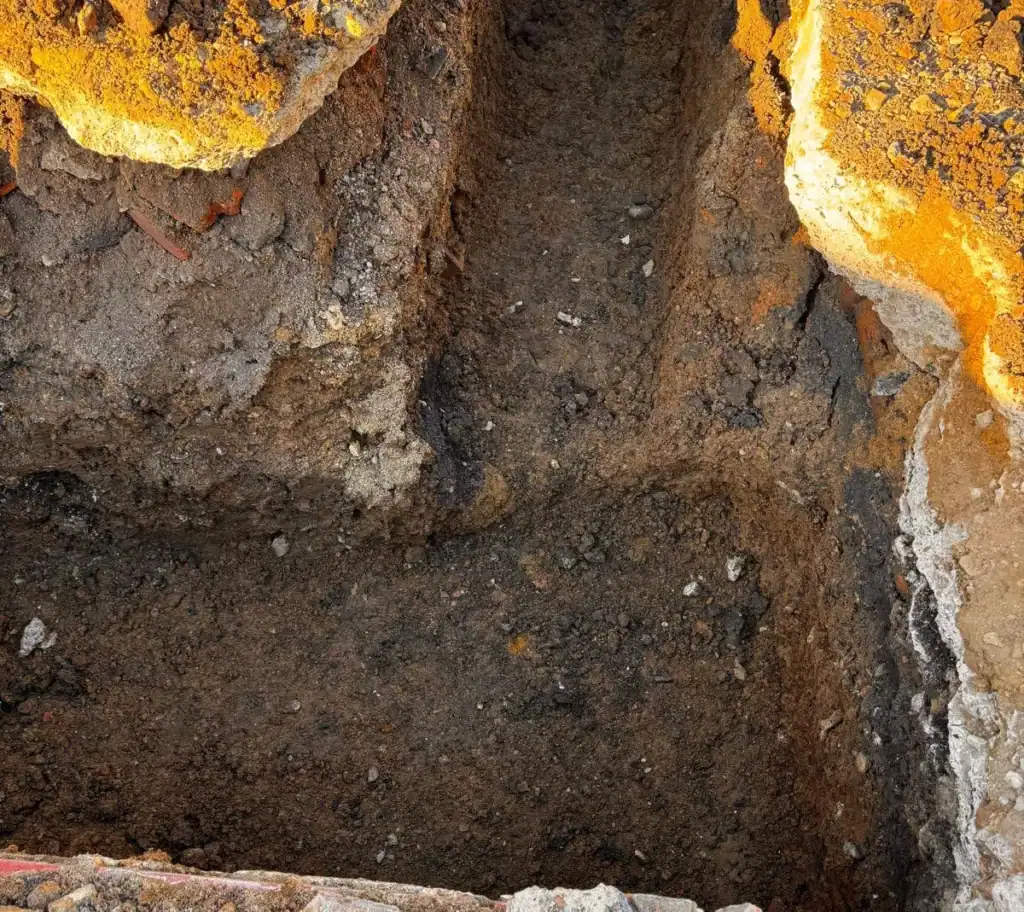
Trees complicate rear garden foundations significantly. A mature oak 8 metres from your proposed extension affects foundation depth due to clay shrinkage risks. Building Control references NHBC Chapter 4.2 standards—the accepted technical guidance for demonstrating compliance with Building Regulations Part A.
Engineering design must consider the mature height and influence zone of tree species, not the current state of the tree. A small tree 2 metres from your foundation line might only be 3 metres tall today, but if it’s a species that reaches 15 metres at maturity, your foundations must account for that future water demand and root spread. Building Control won’t accept shallow foundations where NHBC guidance shows excessive movement risk.
When NHBC calculations show required depths exceeding 2.5 metres, traditional strip foundations become impractical. This triggers the need for special foundation systems—typically piled foundations with ground beams. The additional cost protects your property from long-term subsidence risk rather than representing over-engineering.
Proximity to neighbouring foundations triggers Party Wall Act procedures. If your rear extension foundations come within 3 metres of your neighbour’s foundations and go deeper than theirs, you need Party Wall notices served.
Build Over Agreement requirements apply if any public sewer runs through your rear garden within 3 metres of proposed foundations. Thames Water, Anglian Water, or your regional provider must approve foundation design before Building Control signs off.
Ground Floor Requirements for Rear Extensions
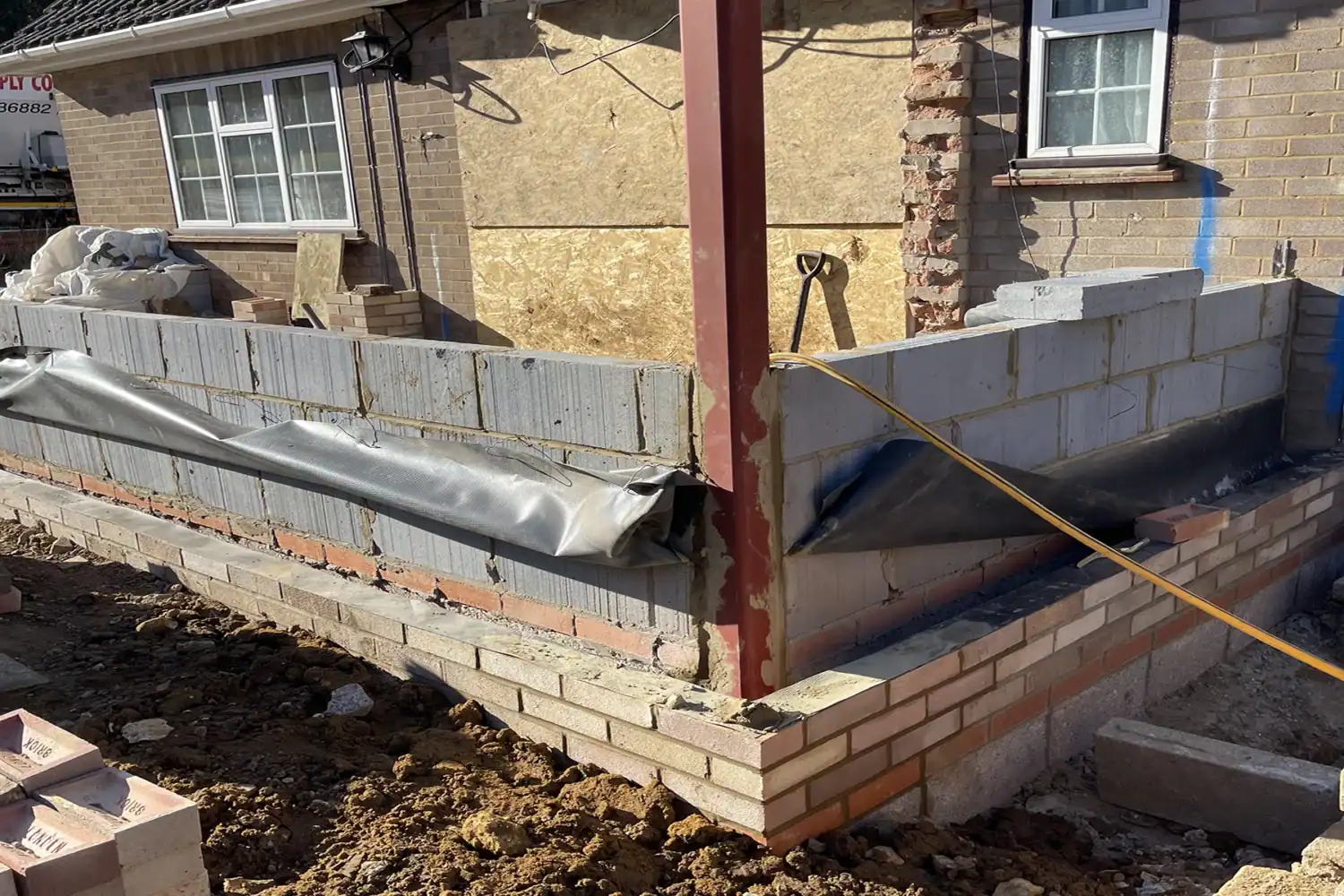
DPM continuity at the rear wall junction prevents moisture transfer between old and new construction. Your rear extension DPM must lap with the existing house DPM. Minimum 150mm overlap required.
Step-downs to gardens create thermal bridge risks. When your rear extension floor level sits lower than the existing house floor, insulation must run continuously down the step and under the new slab. Building Control checks for 100mm PIR insulation minimum.
Removing the existing rear wall exposes previously internal surfaces to external conditions. The remaining wall section above your new flat roof needs cavity insulation retrofitted. Either injected bead or external insulation boards work here.
Threshold details between rear extension and garden need careful weathering. Your finished floor level should sit minimum 150mm above external ground level. This prevents rainwater ingress during heavy downpours.
External Walls to Rear Extensions
Cavity closers at the rear junction between old and new walls prevent cold bridging and moisture penetration. Building Control requires proprietary cavity closer systems—not site-cut solutions.
Fire resistance becomes critical when your rear extension sits within 1 metre of the boundary. The rear wall facing your neighbour needs 30 minutes fire resistance minimum. Standard cavity wall construction with 100mm concrete block inner leaf achieves this.
Windows in boundary-adjacent rear walls face severe restrictions. Within 1 metre of boundary, unprotected area can’t exceed 1 square metre per wall. Between 1-2 metres from boundary, you get 4.2 square metres unprotected area.
We prepare comprehensive building regulation drawings for extensions, conversions, and alterations. Detailed plans with structural calculations that satisfy Building Control and keep your project on track.
Learn more about building regulation drawings →Structural Openings to the Rear Elevation
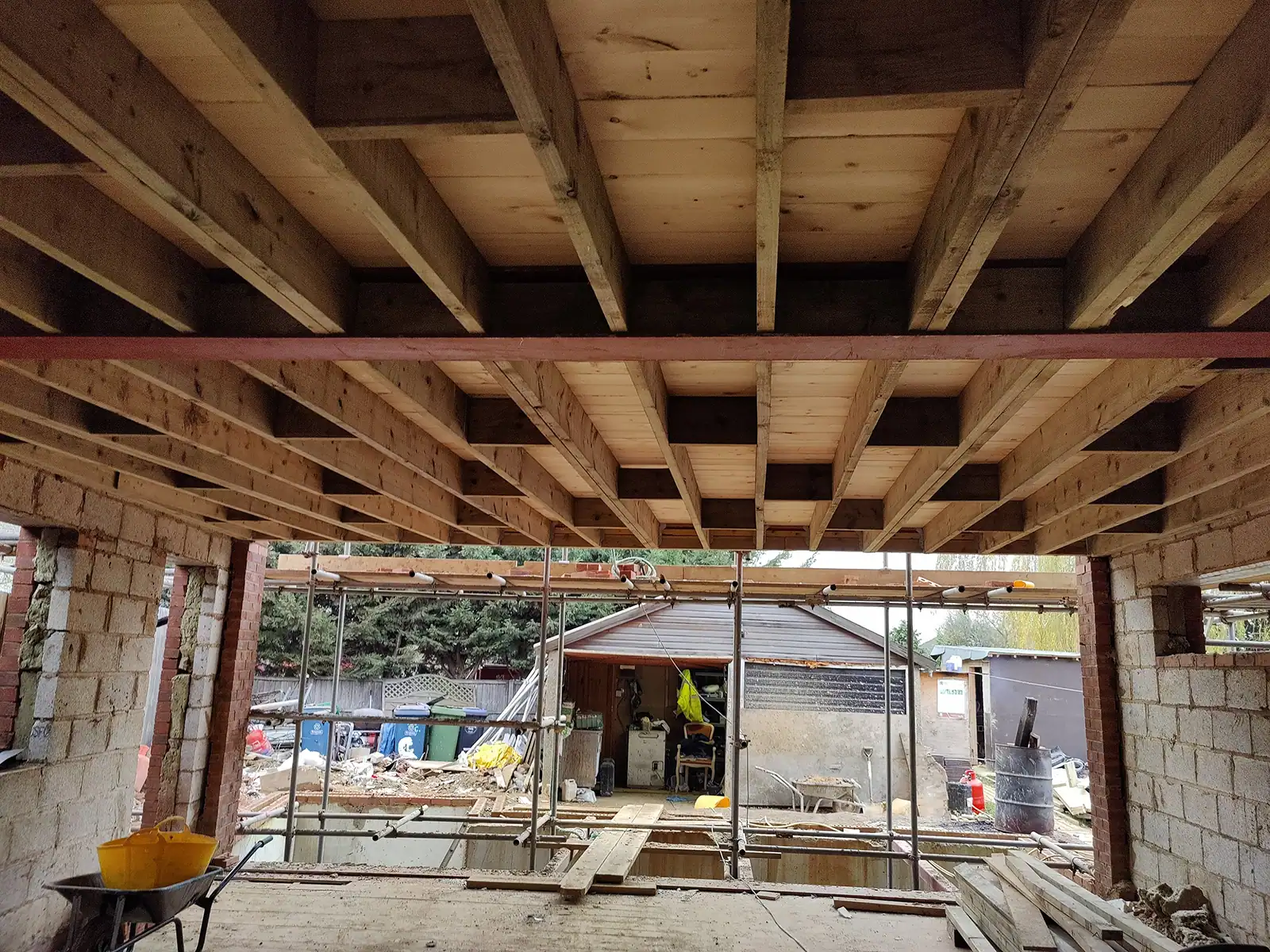
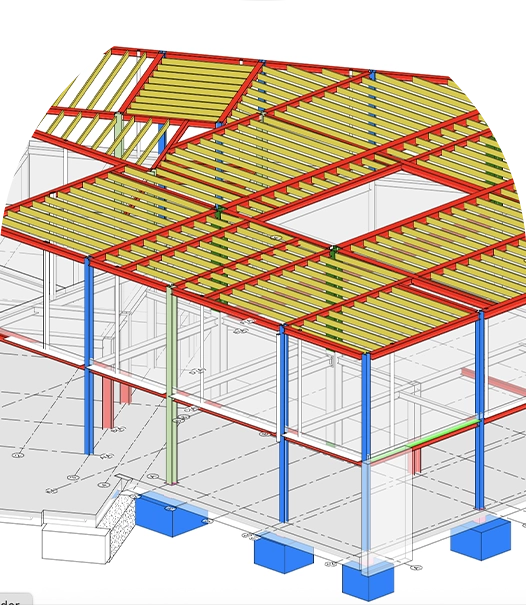
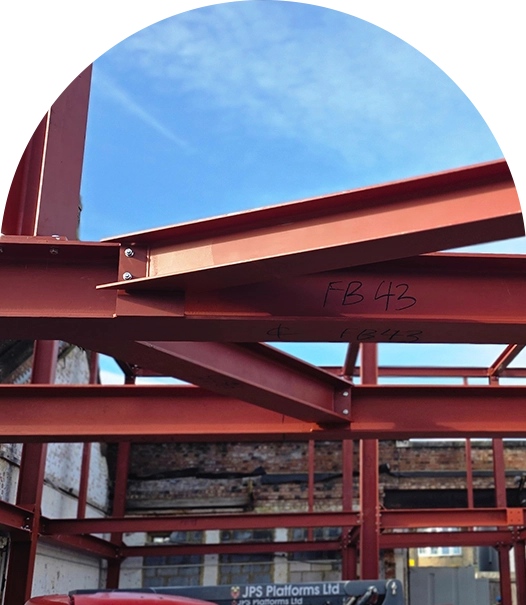
Removing rear walls represents the highest-risk element of rear extension work. Get structural calculations wrong here and you’re facing serious safety issues. Every rear wall removal needs structural engineer calculations showing proposed steel beam sizing, bearing lengths, and load transfer paths.
Steel beams for rear openings typically range from 203x133mm for single-storey extensions up to 305x165mm for two-storey rear additions carrying significant roof loads.
Padstones beneath steel beam ends distribute concentrated loads into masonry. Building Control requires minimum 440mm x 215mm x 100mm dense concrete padstones for standard rear extension beams.
Temporary works during rear wall removal need addressing in your structural methodology. How do you support upper floors while removing the ground floor rear wall? Most projects use Acrow props on strongboys.
Upper Floors (Where Rear Extensions Are Two Storey)
Two-storey rear extensions face additional structural and fire safety requirements beyond single-storey projects. Upper floor joists need structural calculations showing adequate sizing for imposed loads. Typically 1.5kN/m² for domestic bedrooms.
Fire resistance for upper floors in two-storey rear extensions must achieve 30 minutes minimum. Standard 12.5mm plasterboard ceiling beneath timber joists satisfies this requirement.
Means of escape from first floor rear bedrooms follows strict rules. Windows must achieve 0.33m² minimum openable area. The bottom of the opening can’t sit higher than 1100mm from floor level.
Roof Construction for Rear Extensions
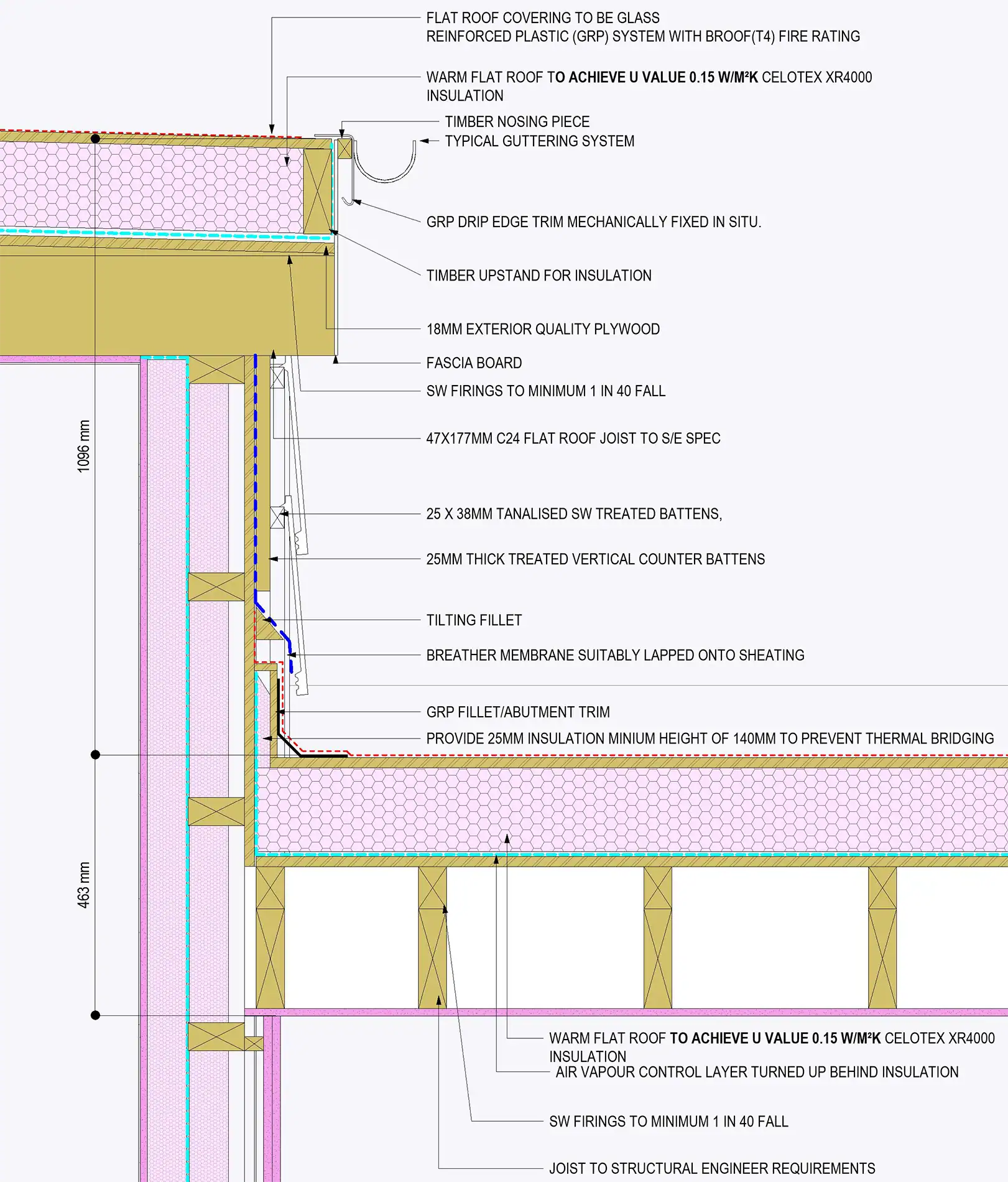
Flat roofs dominate single-storey rear extension design. Cheaper, simpler, and easier for maintaining existing house proportions. Building Control requires flat roofs achieve minimum 1:40 fall for drainage. Either warm roof construction or cold roof must meet 0.11 W/m²K U-value.
Junction between new flat roof and existing rear elevation creates critical weathering details. Lead flashing must extend minimum 150mm up the existing wall.
Drainage falls to rear gardens must direct rainwater away from the building. Your flat roof needs minimum two rainwater outlets if the roof area exceeds 40m².
Chimney Stacks and Flues Affecting Rear Extensions
Removing rear chimneys during extension work requires structural assessment of remaining chimney portions. If your rear extension removes the fireplace supporting a chimney stack, the remaining stack above needs supporting.
Flues running through rear additions need maintaining if still in use. Gas flues must maintain minimum 600mm separation from windows and openings.
Windows and Doors in Rear Extensions
Glazed rear elevations—popular in modern extensions—need meeting thermal performance standards. Windows and doors must achieve maximum 1.4 W/m²K U-value.
Safety glazing applies where glazing sits within critical locations. Below 800mm from floor level or within 300mm of door edges. Toughened or laminated glass meeting BS 6206 required in these zones.
Ventilation for habitable rooms in rear extensions follows specific calculations. Background ventilation (trickle vents) must provide 8,000mm² equivalent area.
Internal Walls and Layout Changes
Knock-throughs to kitchens when adding rear extensions create large open-plan spaces that need careful structural detailing. Removing the original rear wall creates a single large room spanning old house and new extension.
Services in Rear Extensions
Drainage rerouting to accommodate rear extensions involves relocating existing gullies, inspection chambers, and underground pipework. Building Control requires drainage plans showing new pipe runs, gradients (minimum 1:40 for foul drainage), and connection points to existing systems.
Kitchen waste from new rear extension kitchens needs proper venting. Soil stacks require 100mm minimum diameter with air admittance valves acceptable where conventional venting through roof proves impractical.
Ventilation provisions for rear extension kitchens follow mechanical ventilation rates. 30 litres/second during cooking, 13 litres/second background ventilation.
Planning Permission vs Building Regulations for Rear Extensions
Building Regulations and planning permission are separate requirements for house extensions. You can need one, both, or neither depending on your project specifics. Many homeowners confuse the two—planning permission controls what you build and where, while Building Regulations ensure how you build meets safety and performance standards.
Single-Storey Rear Extensions Under Permitted Development
Single-storey rear extensions often qualify for permitted development rights, meaning you don’t need planning permission. These permitted development rules vary significantly based on your property type.
However, permitted development still requires Building Regulations approval. Just because you don’t need planning permission doesn’t mean you skip Building Control. Every rear extension—whether permitted development or not—needs structural calculations, thermal performance specifications, and drainage compliance.
Rear Extensions for Detached Houses
Detached houses get the most generous permitted development allowances for rear extensions. You can build up to 4 metres from the rear wall for single-storey extensions without planning permission. Two-storey rear extensions on detached properties can extend up to 3 metres from the original rear wall.
The maximum height at the eaves can’t exceed 3 metres for single-storey extensions. Overall maximum height can’t exceed 4 metres for flat roofs. These limits apply even though your property doesn’t share walls with neighbours.
Rear Extensions for Semi-Detached and Terraced Houses
Semi-detached and terraced houses face tighter restrictions due to proximity to neighbouring properties. Single-storey rear extensions can only extend 3 metres from the rear wall under permitted development—one metre less than detached houses.
Two-storey rear extensions on semi-detached or terraced properties face the same 3 metre limit from the original rear wall. The shared wall situation means Building Control pays extra attention to party wall compliance and fire resistance requirements.
Party Wall Act procedures apply to virtually all semi-detached and terraced rear extensions. You’ll need serving notices on affected neighbours before starting work, even if your extension qualifies as permitted development for planning purposes.
Rear Extensions in Conservation Areas
Conservation areas severely restrict permitted development rights for rear extensions. Any rear extension in a conservation area typically requires planning permission, regardless of size. You cannot rely on standard permitted development allowances.
Local planning authorities in conservation areas scrutinize materials, design details, and visual impact far more carefully than standard applications. Your rear extension must preserve or enhance the character of the conservation area. This often means matching existing materials, avoiding modern flat roof designs, and limiting glazed areas.
Building Regulations requirements remain identical in conservation areas—structural calculations, thermal performance, and drainage standards don’t change. But expect longer approval timelines due to additional conservation officer reviews and potential design revisions.
Frequently Asked Questions
Does a rear extension need building regulations?
Yes, virtually all rear extensions require Building Regulations approval. This applies regardless of whether you need planning permission or not. Even permitted development rear extensions that don’t need planning still need Building Control sign-off.
You can’t legally occupy a rear extension without Building Control completion certificate. This certificate proves your extension meets structural safety, fire safety, thermal performance, and drainage standards. Without it, you face problems selling your property.
What are the key Building Regulations for extensions?
The key Building Regulations for extensions cover seven main areas. Part A (Structure) requires structural calculations for foundations, steel beams, and floor joists. Part B (Fire Safety) mandates fire resistance for walls near boundaries and means of escape from upper floors.
Part F (Ventilation) specifies background and purge ventilation rates for habitable rooms. Part L (Conservation of Fuel and Power) sets thermal performance standards for walls, roofs, windows, and floors. Part H (Drainage and Waste Disposal) covers foul and surface water drainage systems.
Why does my structural engineer recommend deep or piled foundations?
Building Regulations Part A requires foundations designed to prevent movement from trees, clay soils, and moisture changes. Your structural engineer uses NHBC Chapter 4.2—the accepted technical standard used by Building Control—to determine the actual foundation depth required to comply with Part A.
When NHBC calculations show required depths exceeding 2.5 metres due to tree proximity or high plasticity clay, traditional strip foundations become impractical. Building Control won’t accept shallow trench foundations where NHBC guidance shows excessive subsidence risk because it would fail Part A compliance.
This triggers the need for special foundation systems, typically piled foundations with ground beams. The foundation design protects your property rather than representing over-engineering. Structural engineers have a professional duty to design what’s structurally correct and safe, following recognised technical standards rather than choosing convenient solutions.
The tree’s current size doesn’t matter for engineering calculations. Design must consider the mature height and influence zone of the species. A small tree 2 metres from your foundation line today will grow significantly, increasing water demand and root spread. Ignoring this creates long-term structural issues and potential subsidence claims.
Can I start building my rear extension before Building Regulations approval?
Yes, you can legally start building without Full Plans approval, but you’re taking significant risk. Under Building Notice procedure, you give 48 hours notice and start work while Building Control inspects progress. If they find issues during inspections, you’re stopping work and making corrections at your own expense.
Full Plans approval provides certainty before you start. You know your design complies before spending money on contractors and materials. Building Notice might seem faster, but finding out your steel beam is undersized after installation costs far more than waiting a few weeks for proper approval.
Do I need an architect or structural engineer for Building Regulations?
You don’t legally need professionals for Building Regulations applications, but practically you do. Building Control requires detailed structural calculations for foundation depths, steel beam sizing, floor joist specifications, and load transfer analysis. These calculations must be stamped by chartered structural engineers.
Architectural technologists or architects prepare the building regulation drawings showing floor plans, elevations, sections, and construction details. They coordinate thermal performance calculations and ensure drawings meet all regulatory requirements before submission.
AC Design Solution handles complete rear extension Building Regulation applications—structural calculations, thermal performance specifications, and drainage design—for London homeowners navigating complex regulatory requirements. Our CIAT Chartered Architectural Technologists and structural engineers coordinate every compliance element, from foundation inspections through final Building Control sign-off, across over