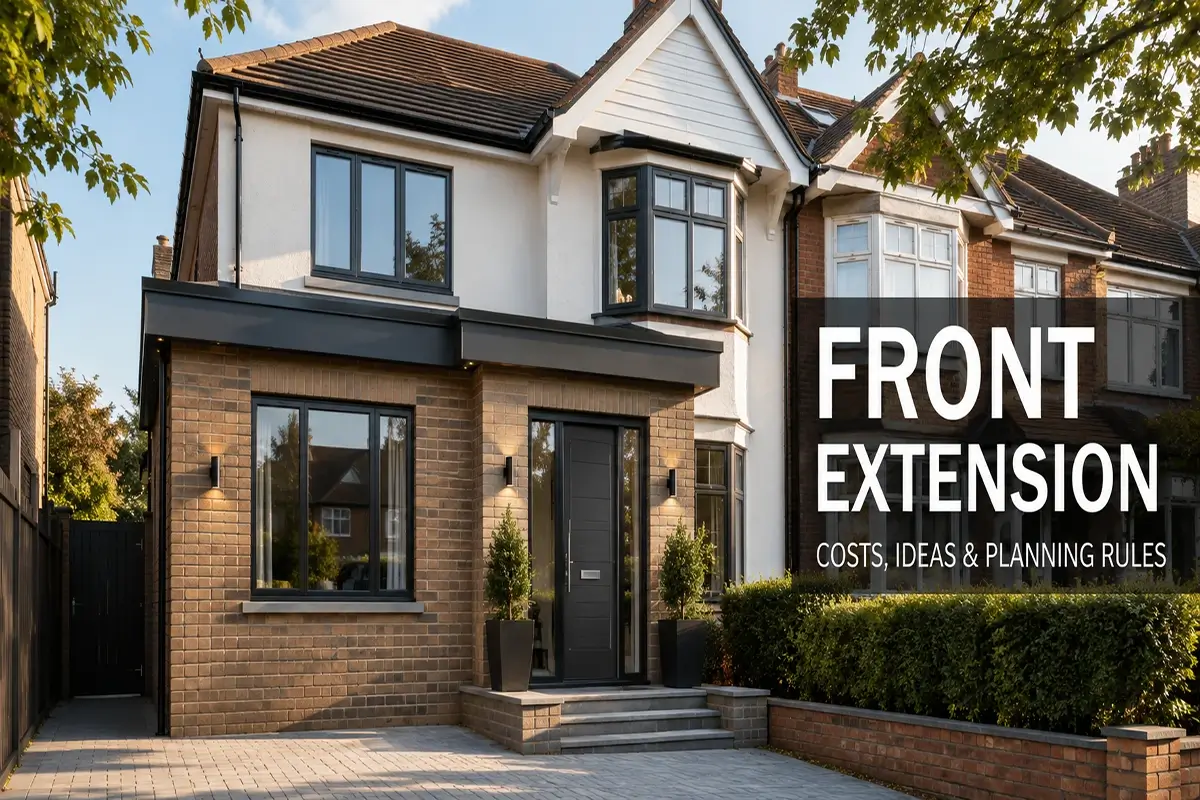
Whether you need planning permission for an extension in the UK depends on the size, type, and location of the proposed extension. Many home extension projects qualify under permitted development rights — without the need to apply. However, extensions projecting beyond the principal elevation are treated more strictly; see our guide to the planning rules for extending the front of your house. Check the planning restrictions for your property type before extension works begin.
Use our permitted development checker to find out whether you need planning permission to extend your house, or try our extension potential checker to see what’s possible on your property.
All extensions
Any building project outside permitted development requires planning permission. Key factors are size of the extension, height, and position. If your project exceeds permitted limits, you must apply for planning permission via the planning portal.
All extensions require building regulation approval. Planning permission and building regulations are two separate processes.
Side extensions
A side extension can often be built under permitted development. It must be single storey, no more than four metres in height, and no wider than half the original house.
If it goes wider than half the original house, you must apply for planning permission — planning restrictions apply regardless of other permitted development criteria. Check with your local planning authority if you’re unsure. Permitted development rights can be removed in some areas.
Rear extension single-storey
A single storey rear extension is the most common extension type in the UK. It often falls within permitted development. The key rules for a rear wall extension without planning permission are:
- A detached house can extend up to 8 metres from the rear wall of the original house
- A semi-detached house or terraced house can extend up to 6 metres from the rear wall of the original
- Maximum height of 4 metres
- Must not extend beyond the side wall of the original house
Extensions between 4 and 8 metres on a detached house fall under the neighbour consultation scheme. So do extensions between 3 and 6 metres on any other house. See that section below.
Rear extension two-storey
A two-storey rear extension will almost always require full planning permission. It must not extend more than three metres from the rear wall of the original house and must not exceed the height of the existing house.
Prior Approval
Prior approval requires notifying your local planning authority. This is part of the planning permission process for larger single storey rear extensions. If no objections are raised within 21 days, approval is granted.

Do you need building regulations for an extension?
Yes. Building regulation approval is required for all extension work in the UK. This includes extensions that don’t need planning permission. You cannot carry out extension works without this approval in place.
Your building regulation drawings must be submitted to building control before work begins on site. For single storey projects specifically, see our building regulation drawings for single storey extensions.
Building regulations Part O, reducing overheating in buildings
Part O came into force in 2022. It applies to new extensions — a one storey extension with a glazed roof is a common trigger. It limits overheating risk in new building work.
Part O relates to glazed areas of new build properties
Part O is triggered when a new extension is created. Your building regulation drawings for extensions must show Part O compliance for large roof lights or extensive glazing.
What is The Party Wall Act?
The Party Wall etc. Act 1996 applies when works affect a shared wall or are within 3 metres of a neighbour’s foundations. If the Act is triggered, serve a party wall notice before building work begins. A party wall surveyor can advise whether your extension triggers the Act and handle the notice process on your behalf.
What is the neighbour consultation scheme?
The neighbour consultation scheme allows larger single storey rear extensions. Notify your local planning authority before starting. If no valid objection is raised, the extension can go ahead.
Other restrictions you need to check before building an extension
Even within permitted development, other restrictions may apply. Always check before assuming your project needs no permission.
The Original House rule
Permitted development rights are based on the original house as first built. Previous extensions count toward the allowance. Your remaining allowance may be smaller than you expect.
Article 4 Direction
An Article 4 Direction removes permitted development rights in a specific area. If your property has one, you must apply for full planning permission even for works that would normally be permitted.
Restrictive covenant
A restrictive covenant is attached to your property title. Even with planning permission granted, it can still block your extension project.
Listed buildings
Permitted development rights do not apply to listed buildings. Any extension requires listed building consent. Contact your local planning authority early to get planning permission. You require planning permission approval that may include heritage assessments. Extensions of any size — even a meter or two — can trigger this.
Designated land
National parks, areas of outstanding natural beauty, and World Heritage Sites all restrict permitted development rights. An extension to your house in these areas is more likely to need permission. Side extensions are not permitted development on designated land.
Planning permission
Outside permitted development, apply for full planning permission via the planning portal. Your local council will assess it against local and national planning rules.
What are the criteria which decide whether I need planning permission for an extension?
The main criteria determining whether planning permission is required for your extension are:
- The size of the extension relative to the original house
- How far it extends beyond the rear wall of the original house
- The height of the proposed extension
- Whether it covers more than 50% of the area of land around the original house
- Whether the property is a detached house, semi-detached house, or terraced house
- Whether the property is in a conservation area or on designated land
- Whether an Article 4 Direction applies
Larger single storey rear extensions
Under the neighbour consultation scheme, the limit is 8 metres for a detached house. A terraced house and semi-detached house are limited to 6 metres. If a valid objection is raised, a full planning application may be required.
Check restrictions to Permitted Development
Check the following before starting. Your local planning authority may have removed permitted development rights. Prior extensions may have used up your allowance. The property may sit on designated land or in a conservation area.
Local Authority Consultation
Contact your local planning authority directly. Use the planning portal to check before submitting a formal application.
Common Extension Planning Permission Pitfalls
Misinterpreting Permitted Development Rules
The most common mistake is assuming an extension is automatically permitted development. A small miscalculation on height or depth can mean full planning permission is required.
Overlooking Neighbour Consultation Scheme
Many homeowners miss that the neighbour consultation scheme requires prior notification. Carrying out extension works without notifying the local planning authority is a breach of planning rules.
Frequently Asked Questions
What size extension can I build without planning permission UK?
A detached house can extend up to 8 metres to the rear without planning permission. A semi-detached house or terraced house can extend up to 6 metres. Maximum height is 4 metres.
What extensions are exempt from building regulations?
Very few extensions are fully exempt. A small conservatory or porch may be exempt. Most new extension work still requires building regulation approval. Even if you don’t need planning permission for your extension, building regulations still apply.
Do you need neighbours permission for an extension?
You don’t need your neighbour’s permission. The neighbour consultation scheme gives neighbours the right to object. If the Party Wall Act applies, serve a formal notice first.
Do I need planning permission for a kitchen extension UK?
Not always. A kitchen extension to the back of your house within permitted development limits needs no planning permission. If it exceeds the limits, full planning permission is required. Use the planning portal to check your specific project.
What are permitted development rights?
Permitted development rights allow certain building work without planning permission. They are granted by national legislation. They can be removed by an Article 4 Direction, planning conditions, or in a conservation area.
How do I find out if I need planning permission?
Check with your local planning authority or use the planning portal. Our house extension drawings service includes permitted development advice.
How big can I build a single storey extension without planning permission?
A detached house can extend 8 metres under the neighbour consultation scheme. Standard permitted development allows 4 metres. A semi-detached house or terraced house gets 6 metres under the scheme or 3 metres under standard permitted development. Maximum height is 4 metres. Need to apply for planning permission? Only if these limits are exceeded.
Lawful development certificates
A lawful development certificate confirms your extension is lawful under permitted development rights. It’s not legally required but strongly recommended. Apply via the planning portal before or after work is completed.
Key Factors Affecting Planning Permission for Extensions
Key factors are property type, size of the extension, and location. A conservation area or designated land affects your rights. Check whether permitted development rights have been removed or used up.
Conservatories and Orangeries
A conservatory may qualify as permitted development. It must meet size limits and not exceed the height of the existing house.
AC Design Solution are MCIAT Chartered Architectural Technologists based in London. We provide architectural services for house extensions across London and the Home Counties. For advice on your dream extension and whether your building project needs planning permission to extend, get a quick quote.