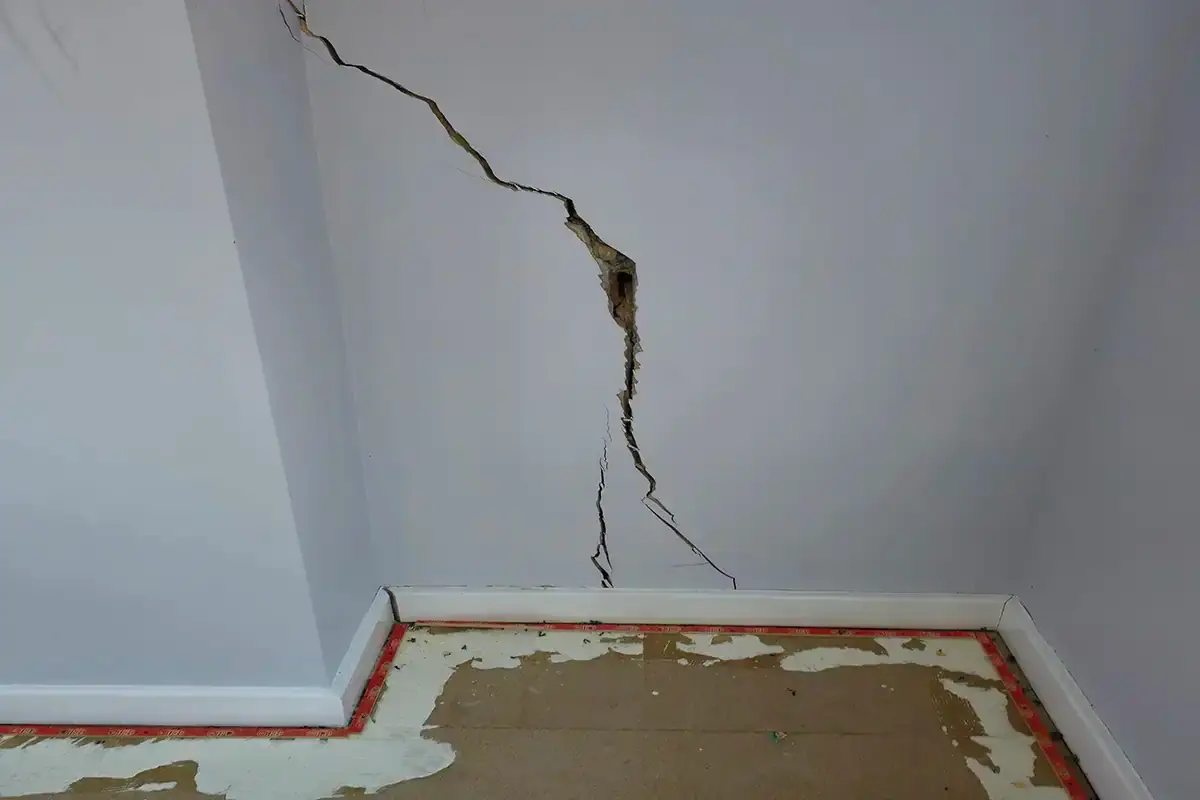
Before you knock down a wall in your home, you must identify a load-bearing wall. Getting this wrong can compromise your home’s structural integrity, invalidate your insurance, and create hidden issues when you sell. This guide explains how to identify load-bearing walls, what wall removal involves, and why professional advice is essential before any structural work begins.
What is a Load-Bearing Wall?
A load-bearing wall supports the weight of the floor, roof, or structural elements above it and transfers that load down to the foundations. The wall is responsible for maintaining the building’s structural frame. Without it — or without a proper support beam and padstones in its place — the structure above would have nothing to bear on.
What is a Partition Wall?
A partition wall is a non-structural internal wall that simply divides space. It carries no load from above and can in principle be removed without compromising the building structurally — though building regulations may still apply. The key difference between a load bearing wall and a partition is whether the wall forms part of the structural frame of the building.
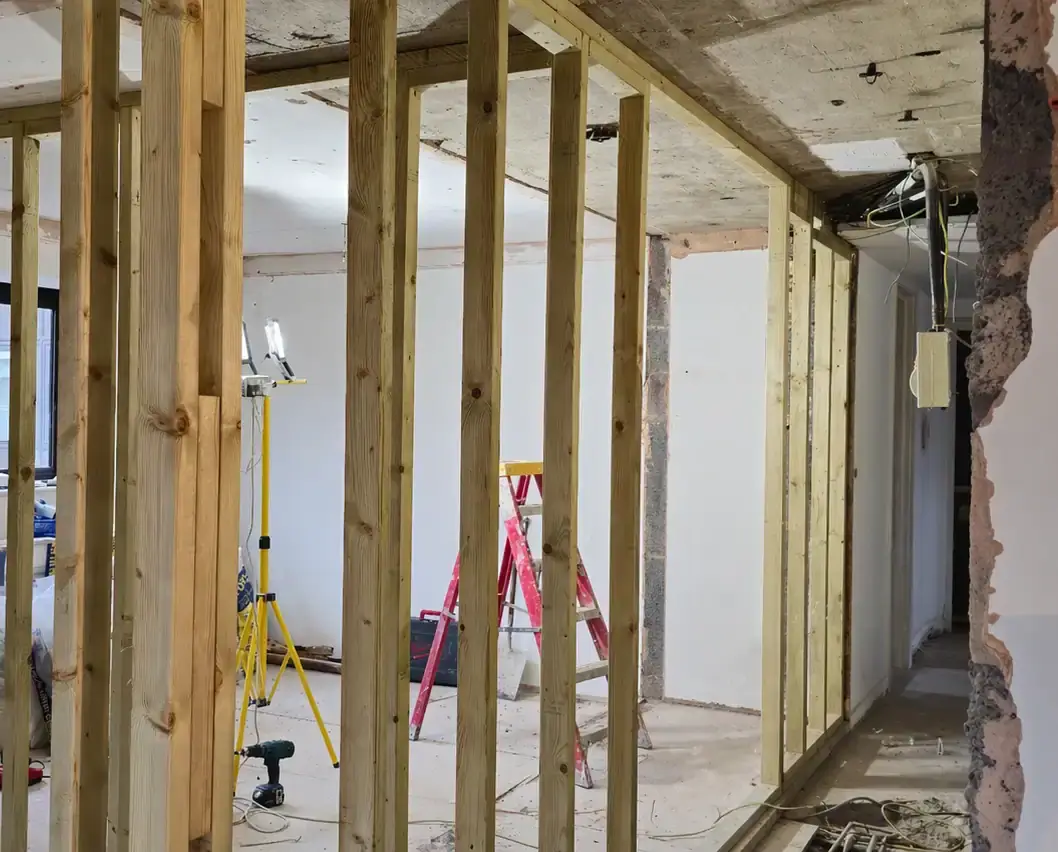
How to Identify a Load-Bearing Wall
There is no single method that will definitively confirm whether a wall is load bearing from appearance alone, but the following checks help you determine if a wall is load bearing and whether it requires structural investigation before wall removal proceeds.
Check the Direction of the Floor Joists
The most reliable visual indicator is joist direction. Walls that run perpendicular to the joists — at a 90-degree angle — are very likely load-bearing, as they support the weight of the floor structure at its ends. You can determine joist direction from the floorboards above, since joists run perpendicular to them. Any internal wall running perpendicular to the joists below has a good chance it’s load-bearing and should be treated as such until confirmed otherwise.

Look for Stacked Walls and Wall Runs
Walk through each floor and note where walls align directly above one another. Where a wall runs parallel across multiple floors — from ground level upward — and sits beneath a roof structure, there’s a good chance it’s structural. In a semi-detached or terraced home, the central spine wall running front to back is almost always load-bearing. If you are unsure, check with a structural engineer before proceeding — working around load-bearing walls safely requires knowing exactly which walls are structural. External walls are also structural walls by definition and must never be removed or altered without proper engineering assessment.
Consider Wall Position and Thickness
Load-bearing walls are made from denser materials — brick, concrete blocks, or structural timber — and the thickness of the wall can indicate its structural role. In traditionally built UK homes, load-bearing walls are often found running through the centre of the property, and walls are usually thicker and more solidly built than lightweight partitions. A thick masonry wall near the centre of the building, running parallel to the roof ridge, is frequently structural. A thin stud wall running parallel to the joists is more likely to be a partition. However, thickness alone is not conclusive — load paths must be traced properly by a structural engineer.
How to Identify a Load-Bearing Wall from the Attic
The attic is one of the best places to assess load paths. Look at where the ceiling joists bear and whether any truss members, struts, or purlins transfer loads down toward internal walls. In older homes, diagonal struts often connect the roof structure to load-bearing walls below. Any wall in question that sits directly beneath these load transfer points has a high chance it’s load-bearing. Tracing load paths from the roof downward helps you identify structural walls before any work begins.

Is My Stairwell Wall Load-Bearing?
Walls alongside staircases are frequently assumed to be non-load bearing — but in most UK homes, particularly older homes, they are structural walls. The stairwell wall typically carries trimmer joists from the floor above and supports the home’s structural frame at that junction. In a bungalow without an upper floor this is less likely, but always seek professional advice before removing or altering a stairwell wall.
Can You Remove a Load-Bearing Wall?
Yes — but it must be properly engineered. Our load-bearing wall removal service covers the full structural process from assessment to completion. When you remove a load-bearing wall, the load it was carrying must be redirected through a support beam — typically a rolled steel joist (RSJ) — which spans between two bearing points at either end of the opening. Padstones are installed beneath each end of the beam to spread the concentrated load safely into the masonry below and transfer the weight down through the structure to the foundations.
Structural Support When Removing a Wall
A lintel above a door or window opening serves a similar purpose on a smaller scale. For full wall removal, the beam size must be calculated by a structural engineer based on span, load, and the building’s construction. Attempting to simply remove a load-bearing wall without structural support in place is one of the most dangerous things a homeowner can do — it is never worth the risk. Find out more about the cost to remove a load-bearing wall before you plan your budget.
The Role of a Structural Engineer
The most reliable way to determine if a wall is load-bearing is to consult a structural engineer. Following a site visit, they will assess the wall in question, review the building’s construction, trace the load paths, and confirm whether it’s load-bearing. If wall removal is planned, they will produce structural calculations, specify the correct rolled steel beam and padstones, and prepare drawings for building regulations submission.
Get a structural engineer involved before any structural work begins — not after. Their fee is modest relative to the cost of structural remediation, and removing or altering a load-bearing wall without their involvement puts the building’s structural integrity at risk. Read our full guide on the role of a structural engineer in residential construction to understand what is involved.
Building Regulations and Compliance
Removing or altering a load-bearing wall is notifiable structural work under the Building Regulations 2010. You must notify your local building control before work starts. Structural calculations and drawings must be submitted, and a building contractor must carry out the work in accordance with the approved design. Our structural engineering services cover the full process from assessment through to building regulations sign-off. Inspections at key stages confirm the structural support is compliant, and a completion certificate is issued on satisfactory completion — essential when selling or remortgaging.
When Wall Removal Creates Opportunity
Done correctly, removing a load-bearing wall can create more space and open up a ground floor to deliver the open-plan layout that many homeowners want. Structural changes of this kind can transform how a home functions, and when the building remains structurally sound throughout — with the right support in place and expert advice followed from the outset — the results can be dramatic. With a competent building contractor working to an approved structural design, load-bearing wall removal is safe, compliant, and adds lasting value.
The key is to make informed decisions from the outset. Know which walls are structural, understand the load paths in your home, and never cut costs on professional advice or structural work. With expert guidance and minimal disruption to the rest of the building, a load-bearing wall becomes an opportunity rather than an obstacle.
Frequently Asked Questions
What is the easiest way to tell if a wall is load-bearing?
Check the attic and look at the direction of the ceiling joists. Walls running perpendicular to the joists — at a 90-degree angle to the joists — have a good chance of being load-bearing. Combine this with a check for stacked walls across floors, then check with a structural engineer before removing a wall or making any structural changes.
Do I need approval to knock down a wall?
Yes, if the wall is load-bearing. Removing or altering structural walls requires building regulations approval, structural calculations, and local building control notification. A building contractor cannot lawfully carry out this structural work without it. Always seek professional advice before starting.
What permits do I need for load-bearing wall removal?
In England and Wales, you must notify local building control and submit structural calculations before removing a load-bearing wall. Planning permission is not usually required for internal structural work unless the property is listed. If you are unsure whether you need a structural engineer, read our guide on do I need a structural engineer to remove a wall — a structural engineer to check the design is a requirement for compliance, not optional.