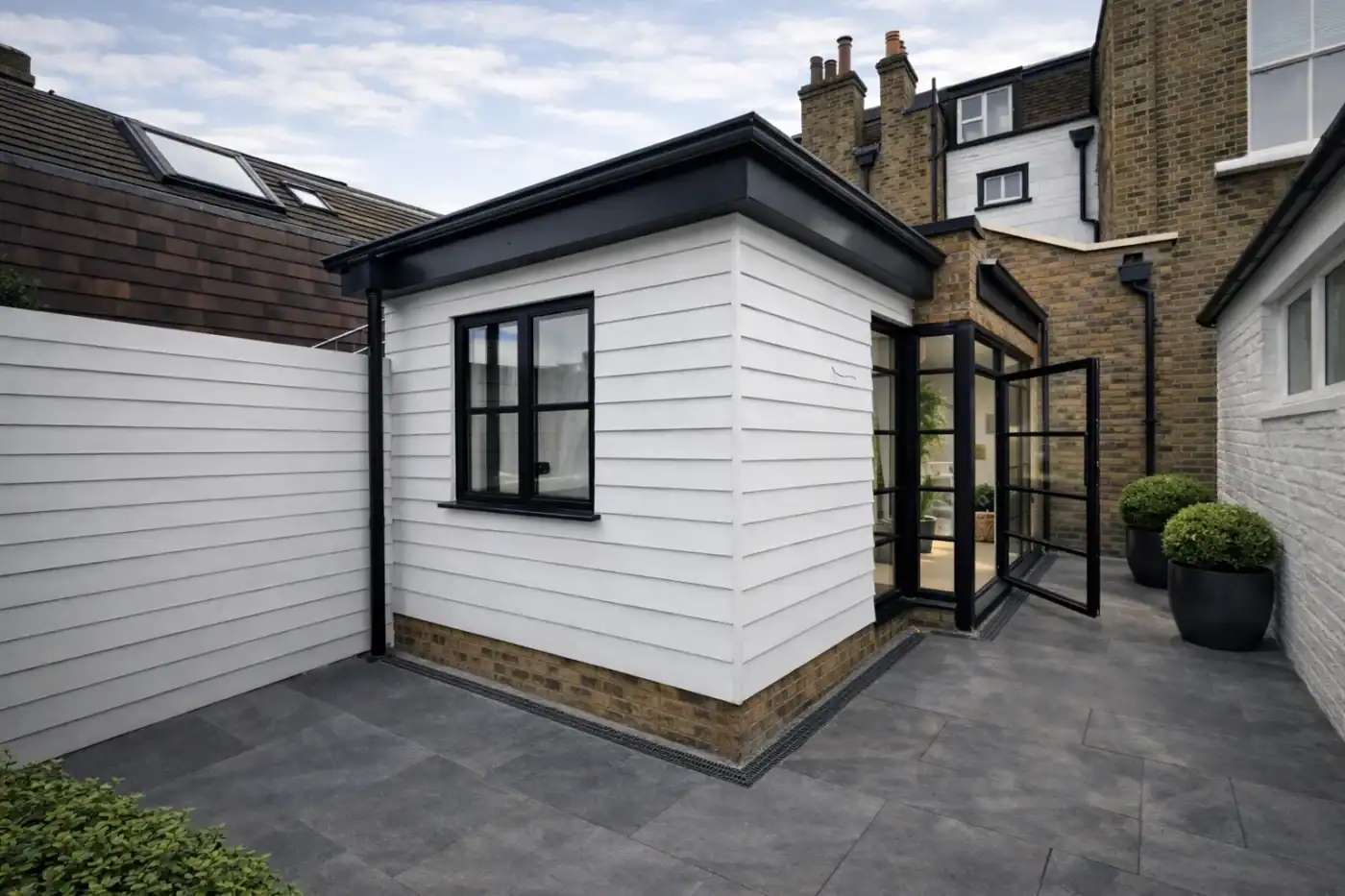
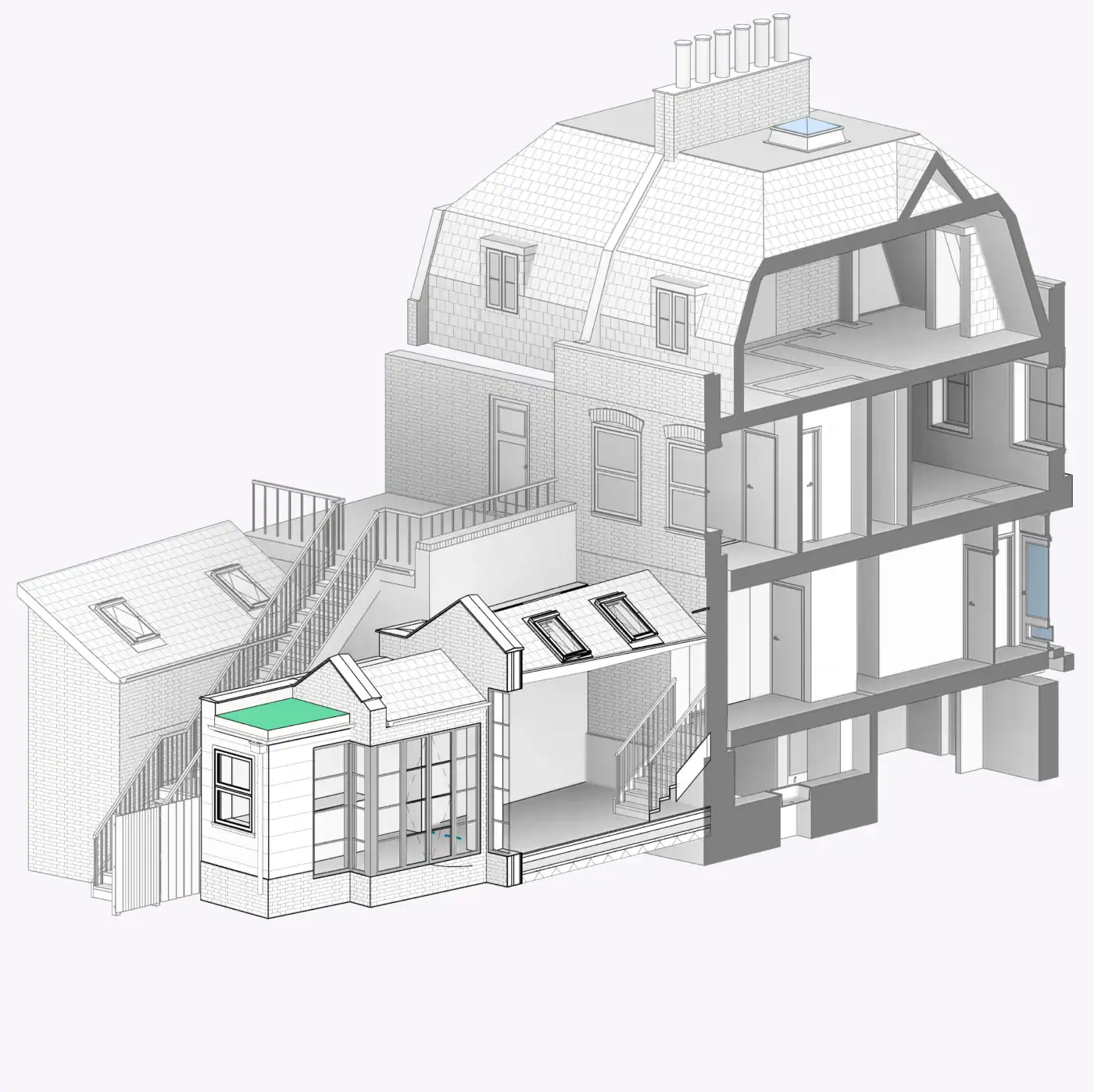
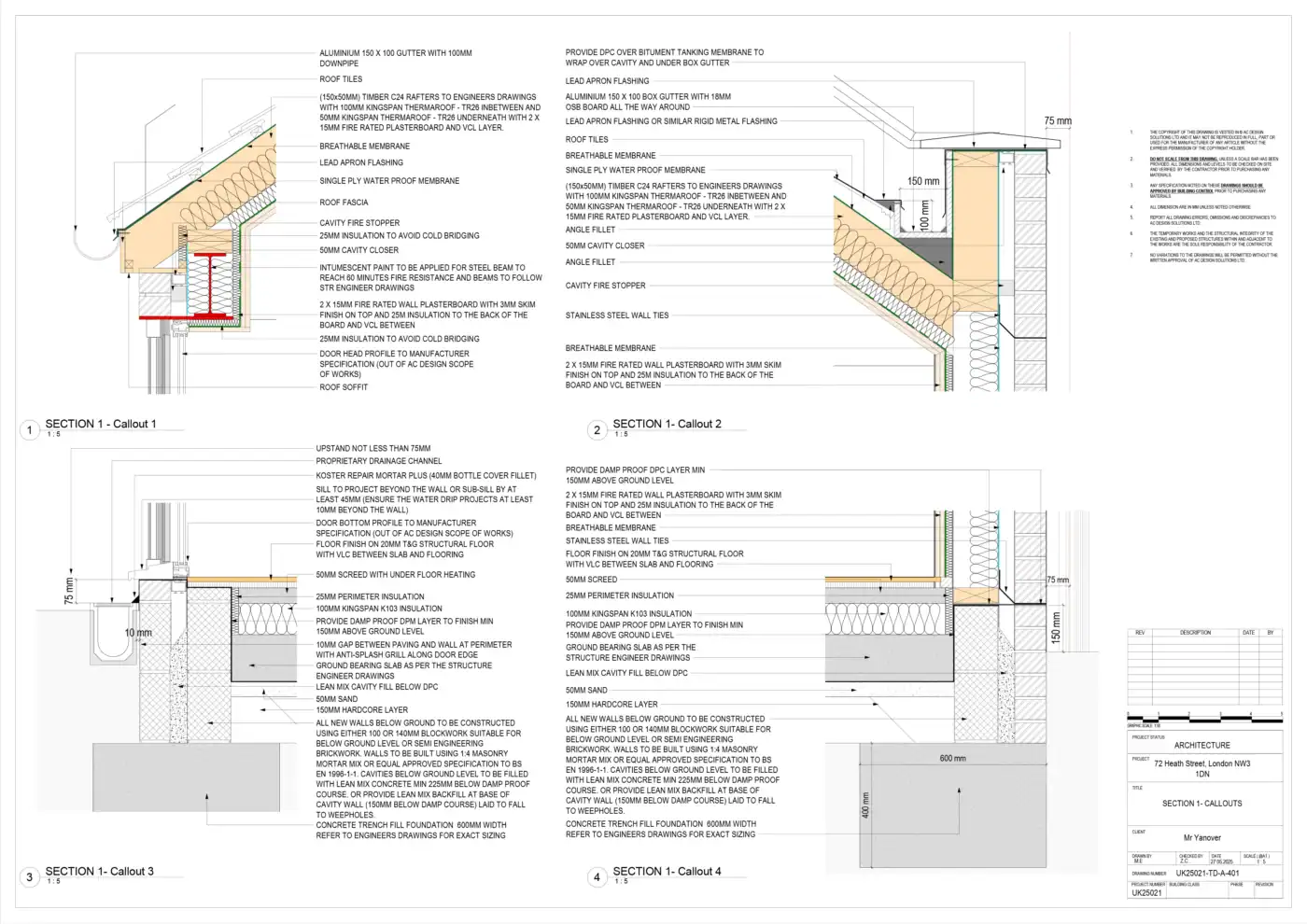
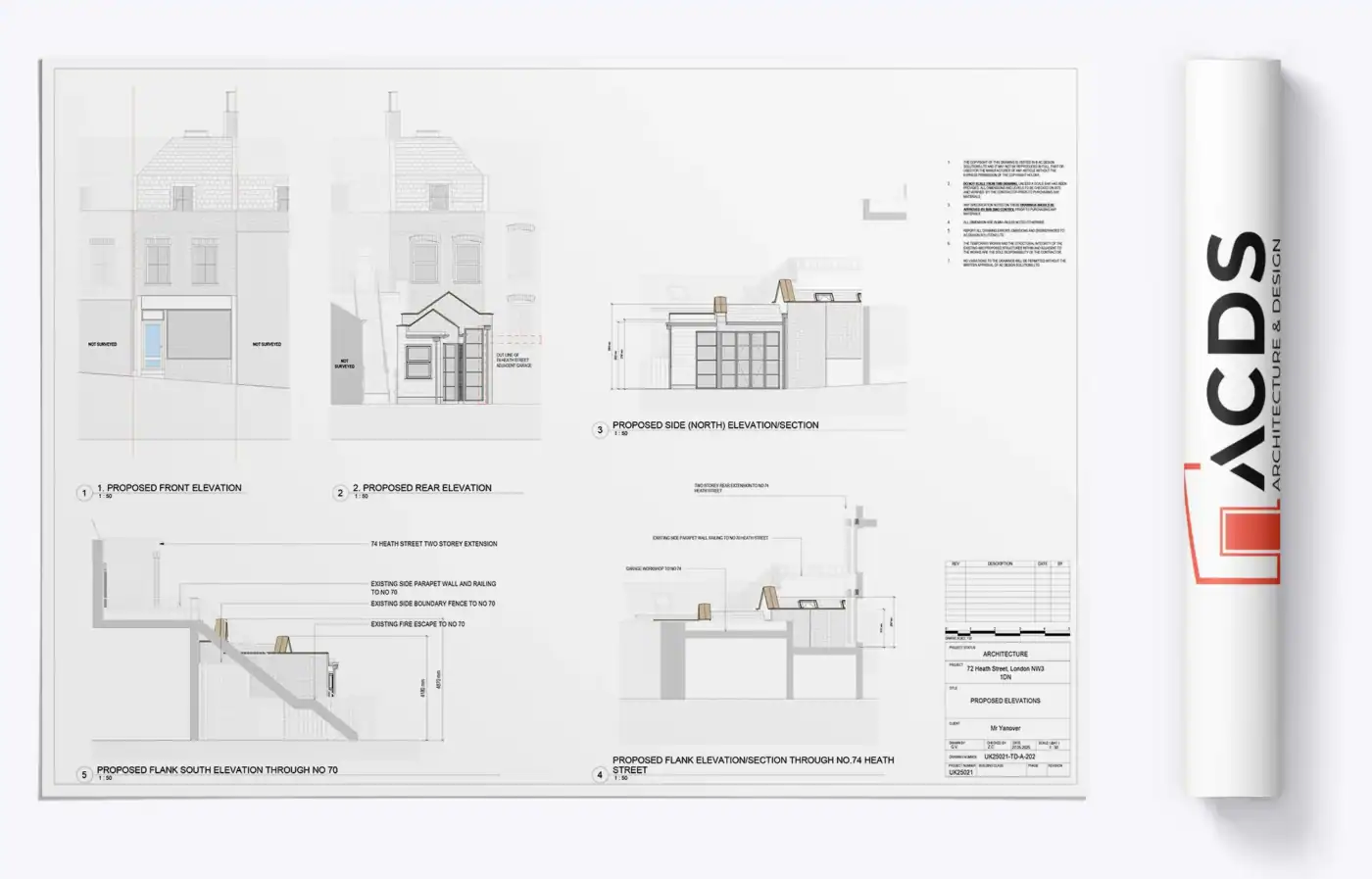
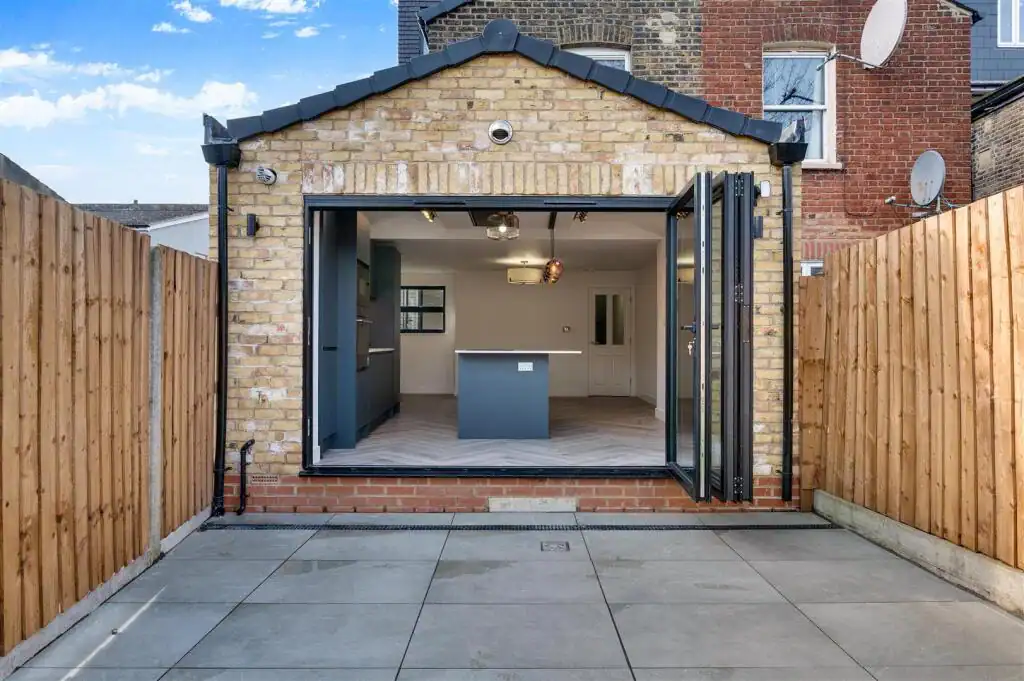
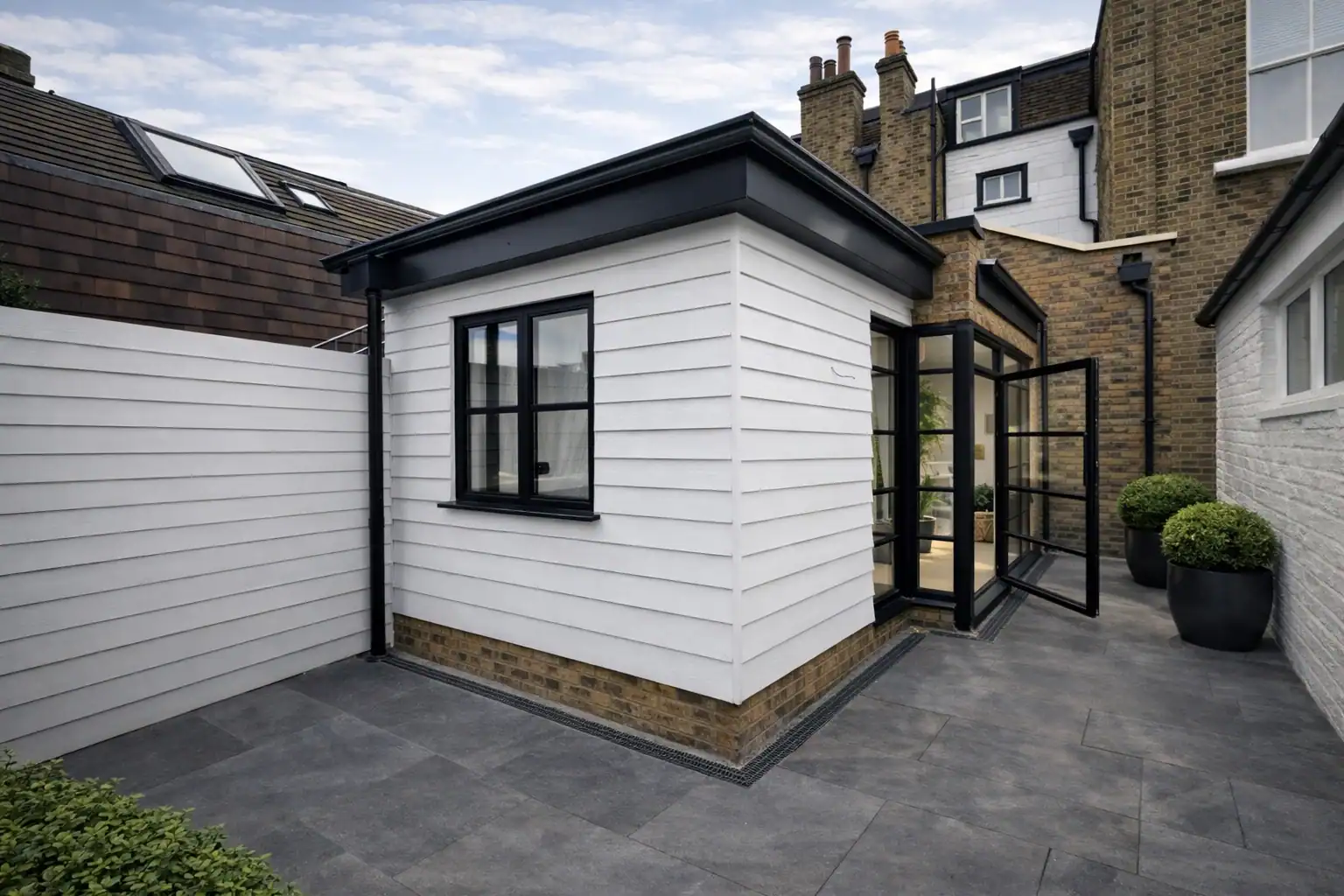
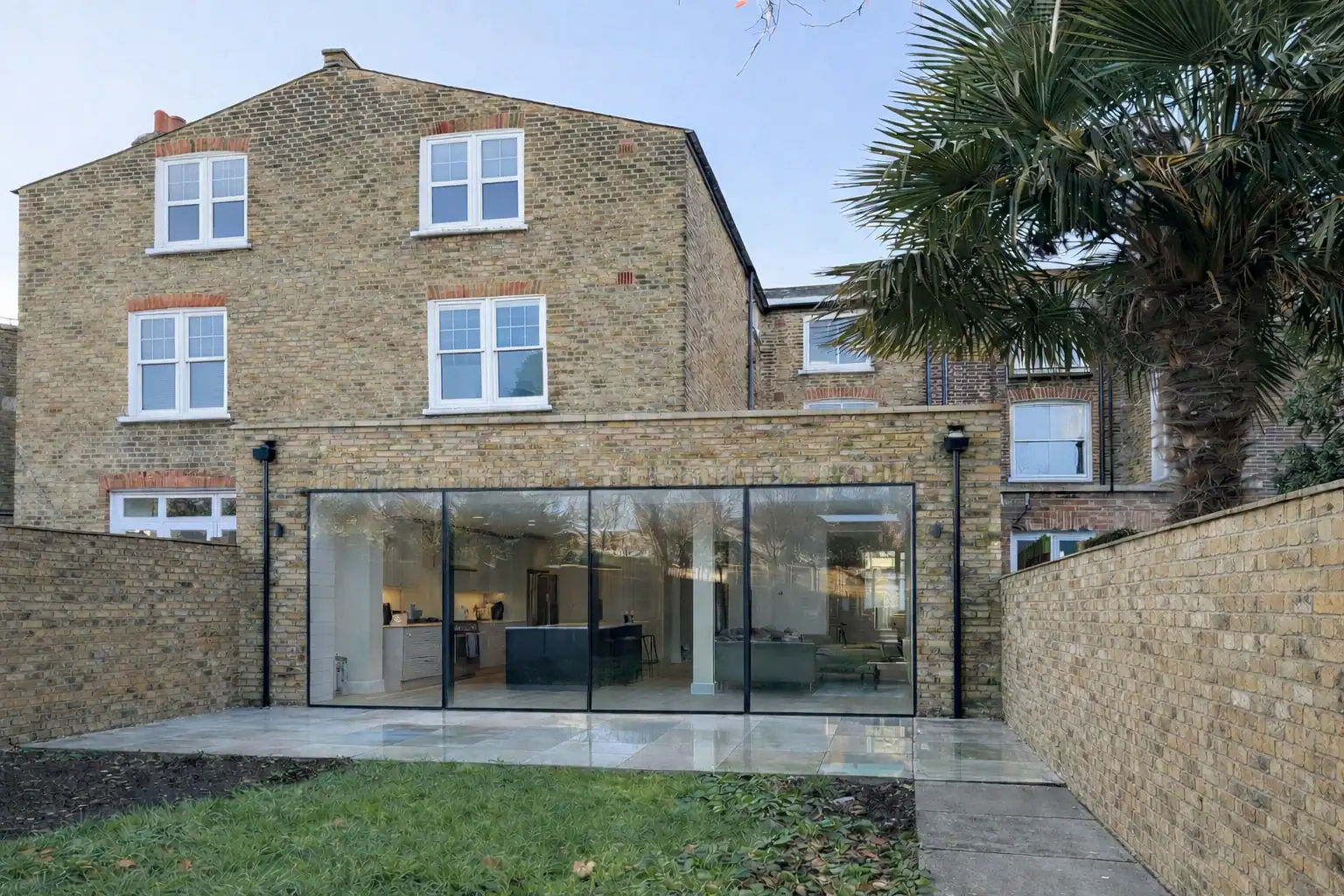
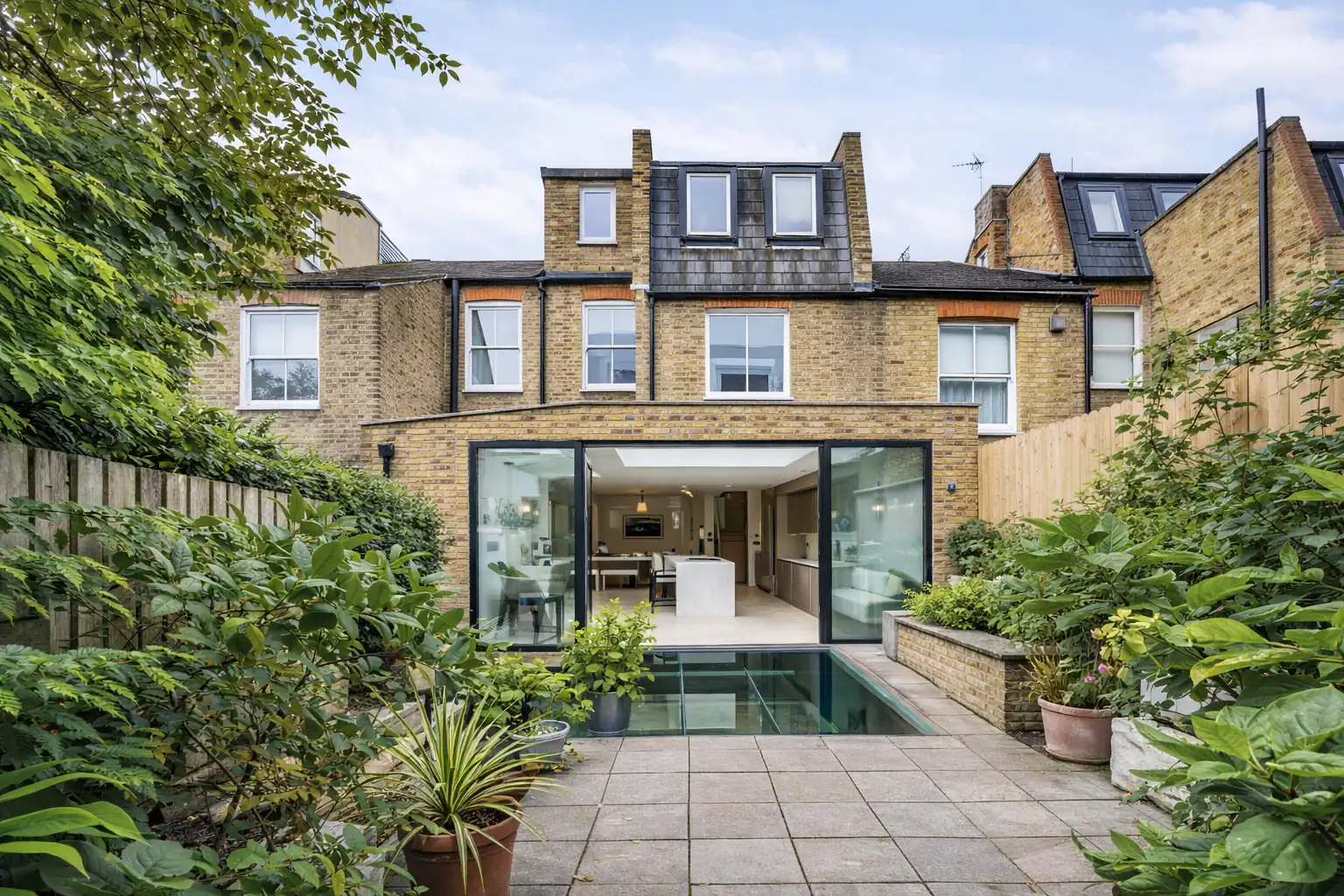
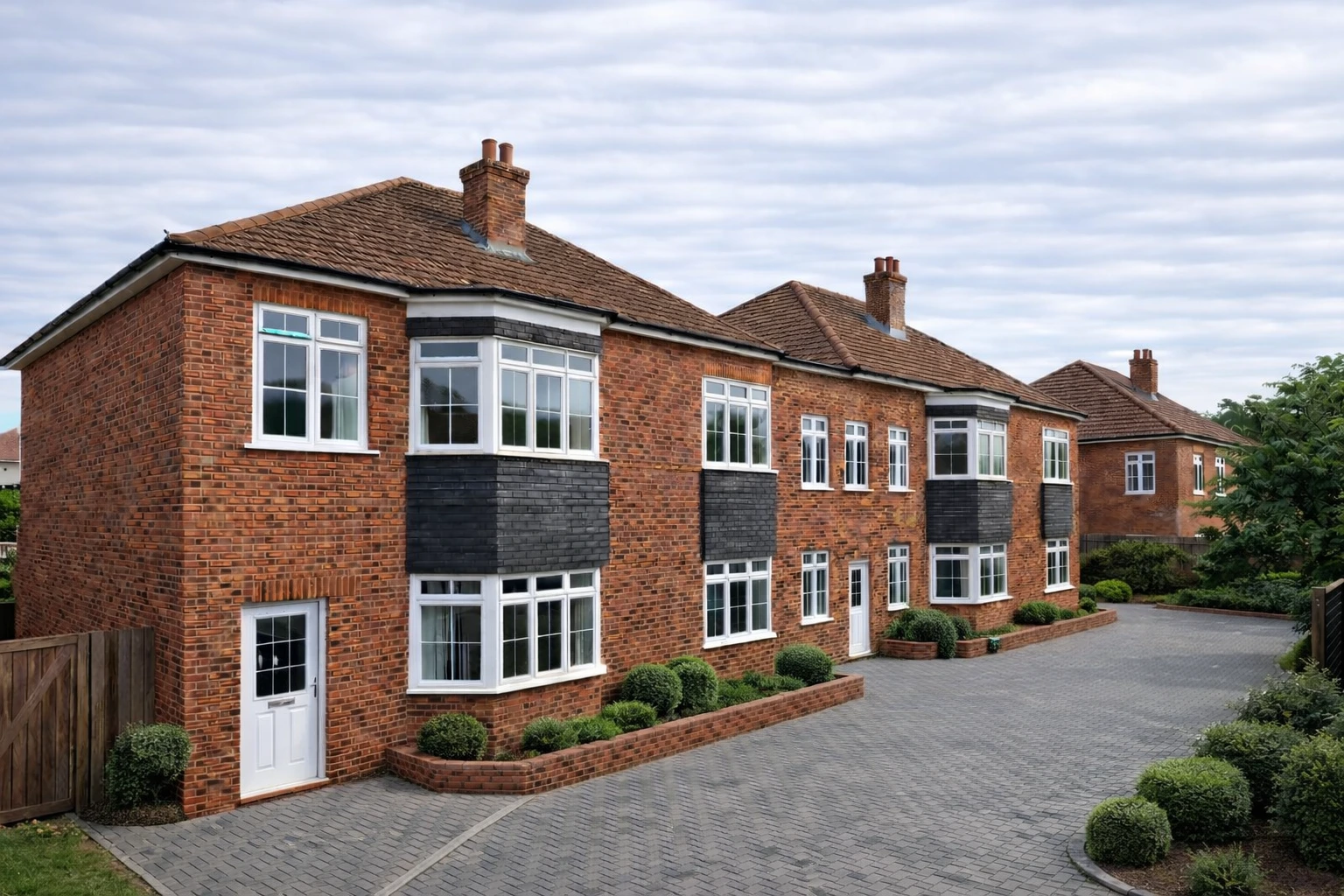
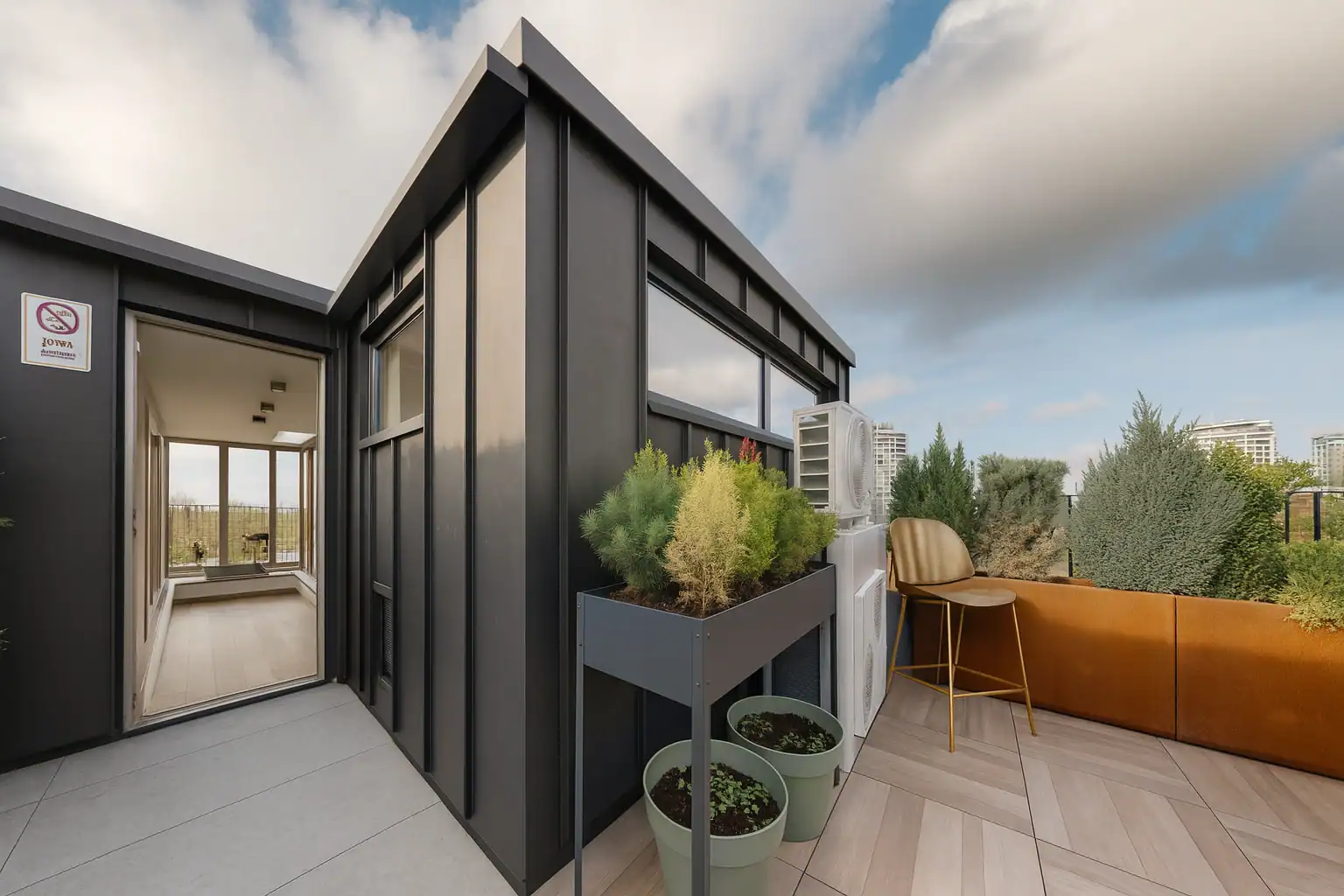
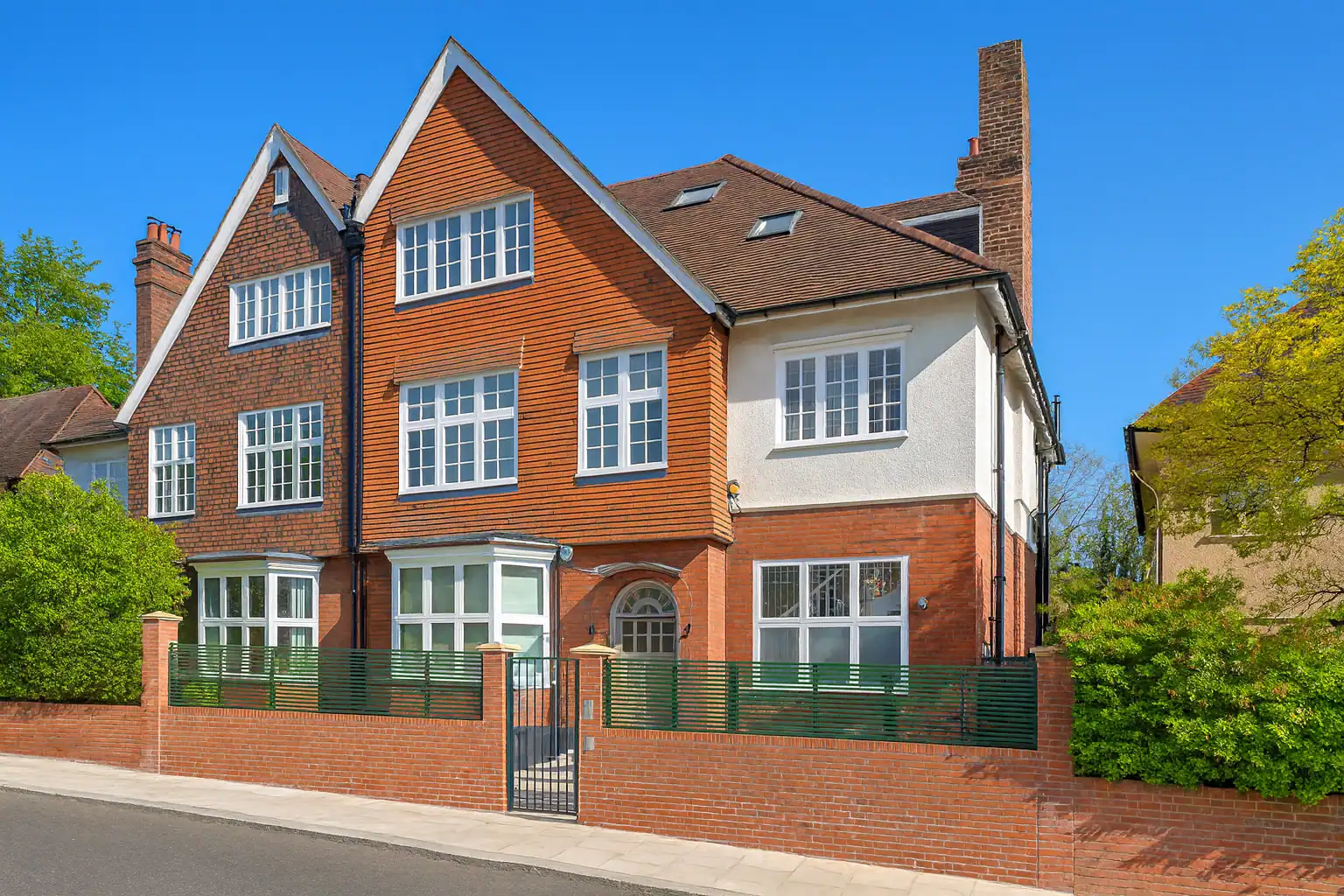
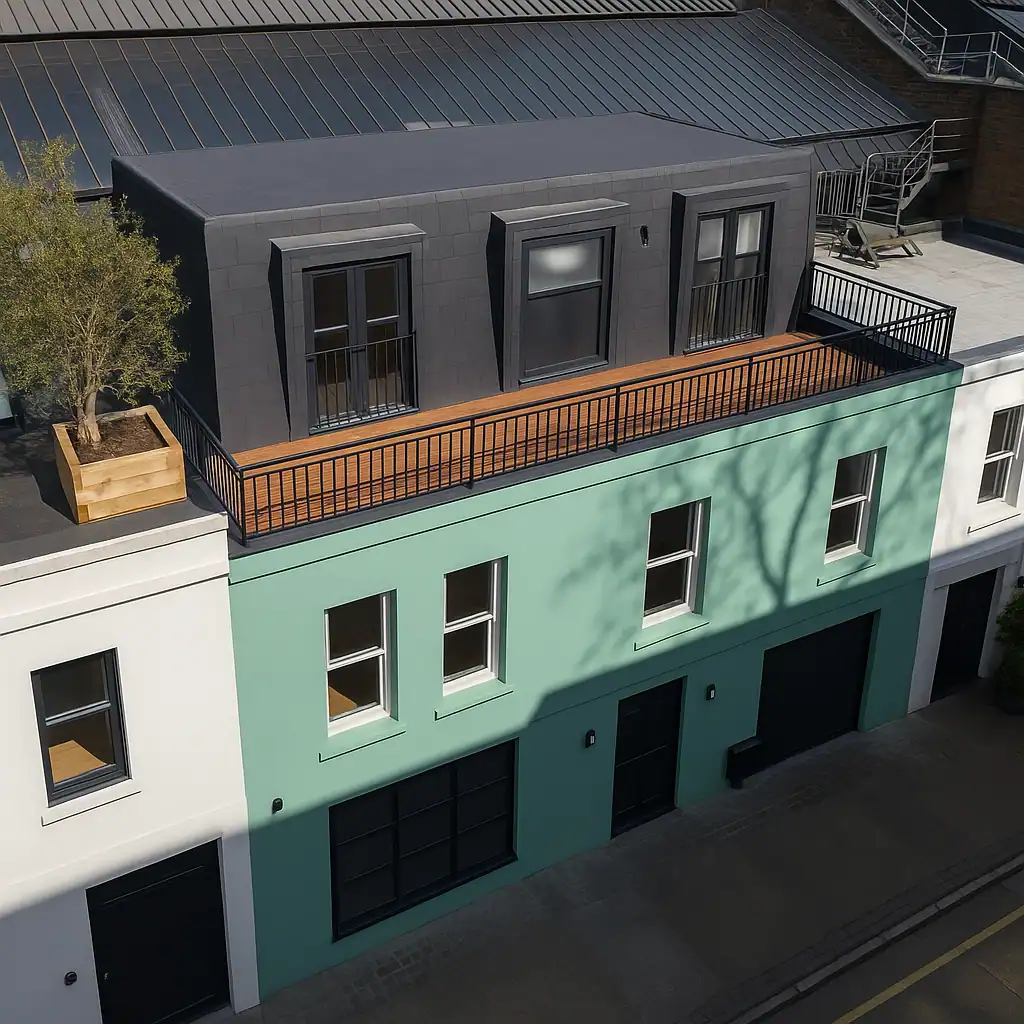
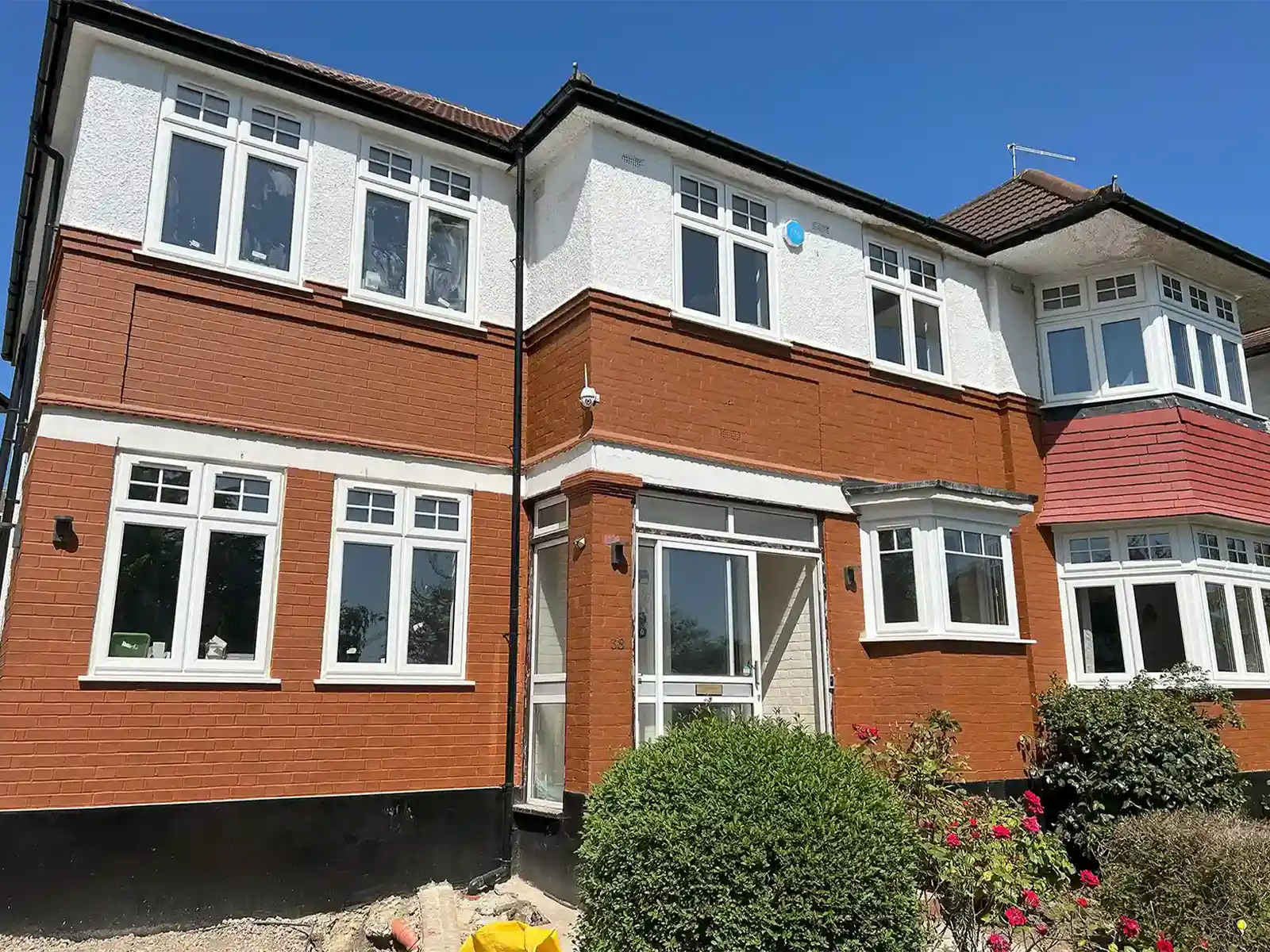
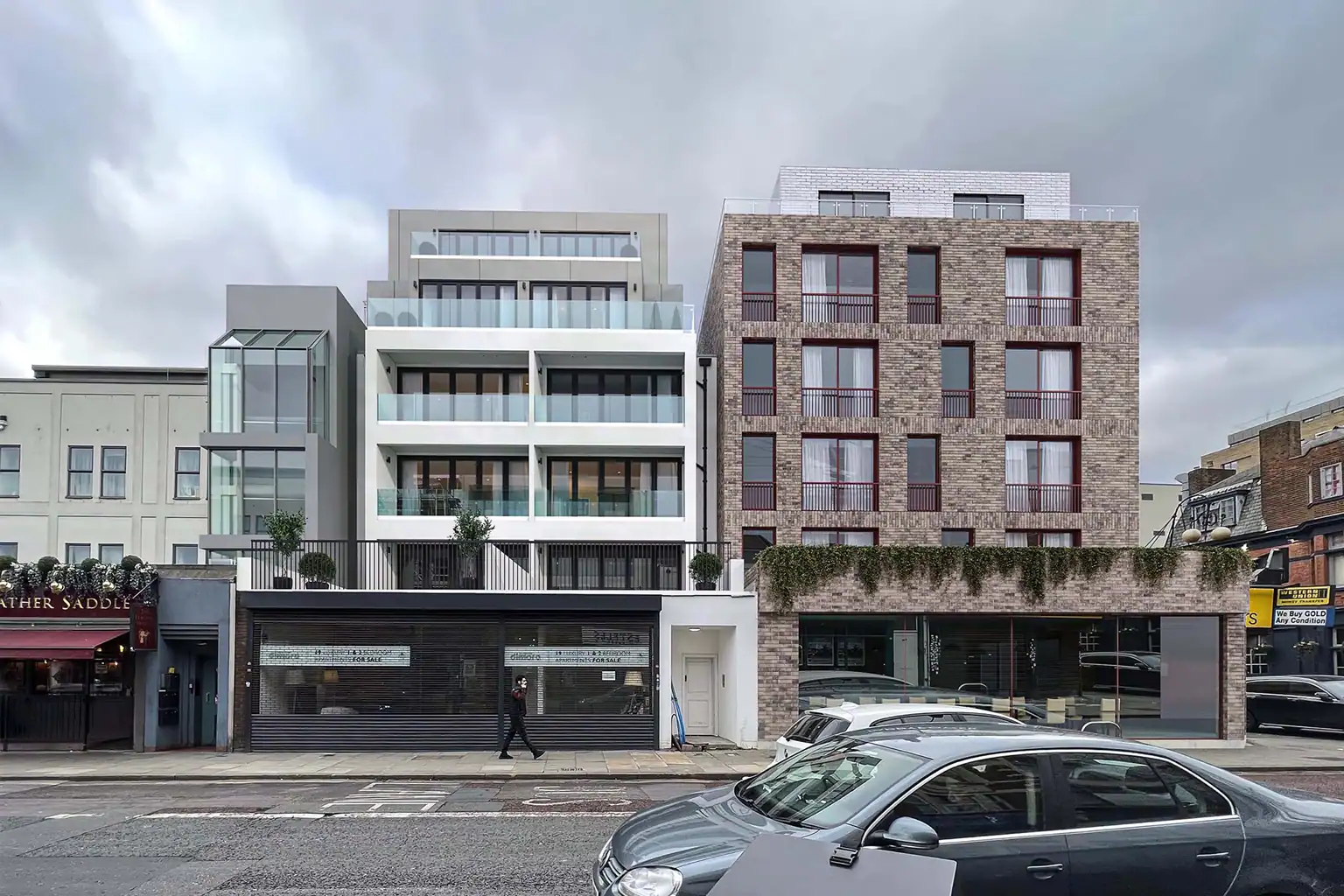
This 72 Heath Street project in Hampstead, NW3 1DN involved building regulation drawings, structural engineering, and party wall surveying for a single storey extension to a grade II listed building. With an existing basement, a tight urban plot, and spliced timber frame construction required to navigate site access constraints, AC Design Solution handled every technical discipline in-house delivering a coordinated package across all three scopes without a single gap between consultants...
Read more
▼
The Project in Brief
Location: 72 Heath Street, Hampstead, NW3 1DN | Building Status: Grade II Listed | Project Type: Single Storey Extension | Planning Authority: London Borough of Camden
Services: Building regulation drawings, structural engineering drawings and calculations, party wall notices and agreements. Planning permission and listed building consent were not in our scope the client had already secured both before appointing us.
Extending a Listed Building — What You're Actually Dealing With
Listed buildings are protected for a reason. Whether it's a grade II listed house, a grade II listed Georgian terrace, or a listed cottage, the moment a building carries listed status the rules change. You'll need listed building consent on top of any planning permission, and in many cases both applications run in parallel through the local planning authority.
Extensions to listed buildings aren't refused outright — but a well-designed extension that respects the special architectural or historic interest of the original building is non-negotiable. Historic England's guidance is clear: any extension to a grade II listed building needs to preserve the character of the original building and its setting. A poorly conceived modern addition that ignores the history of the building will not get through the planning process.
At 72 Heath Street, listed building consent was already in place when we were appointed. But obtaining planning permission and listed building consent is only half the job. Getting the design and construction right so that building control is satisfied — without compromising the significance of the building — is where the real technical work begins.
Why This Project Was Technically Demanding
Listed building constraints. Every material choice and construction method had to sit within the approved listed building consent and satisfy building control without harming the character of the original building. Timber frame was the right call — it kept structural loads manageable and allowed sensitive detailing at the junction with the original building fabric. The brick outer leaf reflected in the design the material language of the historic house, respecting the architectural or historic interest that gives the building its listed status.
Existing basement and a floor level problem. The main building had an existing basement, and the new extension ground floor didn't naturally align with the internal floor of the historic building. We dropped the slab of the new extension to bring everything level. It's a clean solution, but it needs to be properly detailed — drainage, DPC, and the relationship with the adjacent basement structure all had to be accounted for. Our house structural engineer team handled this within the full structural package, making sure the new foundation loads didn't affect the stability of the retained basement wall.
Tight site — spliced structural members. Access was restricted. Getting long structural members onto a tight Hampstead plot without road closures or a crane wasn't practical. We designed spliced connections into the timber frame so the structure could be assembled on site from shorter sections — no loss of structural integrity, no unnecessary disruption. This kind of detail only works when your structural engineer has genuine site experience. It has to be thought through at the structural design stage and detailed properly in the calculations.
Party wall obligations. Extensions may trigger the Party Wall etc. Act 1996 when works are close to a boundary or affect a shared structure. At 72 Heath Street, the tight site meant the adjoining owners needed to be formally notified before anything could start on site. Our party wall surveyor team served the notices, managed the responses, and secured the agreements needed to allow the build to proceed without disputes or delays — all running in parallel with the building regulation and structural work.
Design and Construction: What We Delivered
Building regulation drawings. We produced the full building regulation drawings package for the single storey extension — construction details covering the timber frame, brick outer leaf, floor junction, DPC strategy, and the structural splice connections. Everything building control needed to approve the scheme.
Structural engineering. Our structural engineer produced the full set of structural drawings and calculations — covering the timber frame design, the spliced connections, the dropped slab, and the interface with the existing basement structure. The structural and architectural drawings were fully coordinated in-house from day one.
Party wall surveying. We served notices on the adjoining owners, handled their responses, and put the party wall awards in place before structural work began. Having the party wall process managed internally meant it ran alongside the other disciplines without causing delays to the programme.
Why Listed Buildings Need a Specialist Design Team
Extending historic buildings is not something to hand to a generalist. The design team needs to understand both the planning policy that governs listed buildings and the practical construction realities of working with old fabric. A contemporary extension, a glazed extension, a side extension — all of these can be appropriate on a listed building. What matters is whether the extension design responds to the significance of the building and whether the design and construction approach satisfies both the local authorities and building control.
Listed buildings are protected because they carry special architectural or historic interest that planning authorities consider worth preserving. That protection doesn't prevent you from building an extension on a listed building — it means the alteration of a grade II listed building has to be handled with care, with a design team that understands what the local planning authority and Historic England expect to see reflected in the design.
At AC Design Solution, our CIAT Chartered Architectural Technologists have delivered over 10,000 UK projects — including extensions to listed buildings, grade II listed properties, and historic houses across London.
The Result
The client has a coordinated building regulation approval and full structural sign-off for a single storey extension to their grade II listed home in Hampstead — with party wall agreements secured on both sides and every discipline handled under one roof by AC Design Solution.
Extending a listed building in London? Whether you need listed building consent advice, building regulation drawings for an approved scheme, or a practice to handle your single storey extension, structural engineering, and party wall surveying together — talk to AC Design Solution before you start.
Read less
▲